Skip to content
Designed and built in the USA · Text Andrew
Andrew Gonzalez, Luxury Custom JewelerLuxury Custom Jewelerby Andrew Gonzalez

One stone, chosen carefully

Solitaire engagement rings in San Diego: a solitaire hides nothing, and that's the appeal.

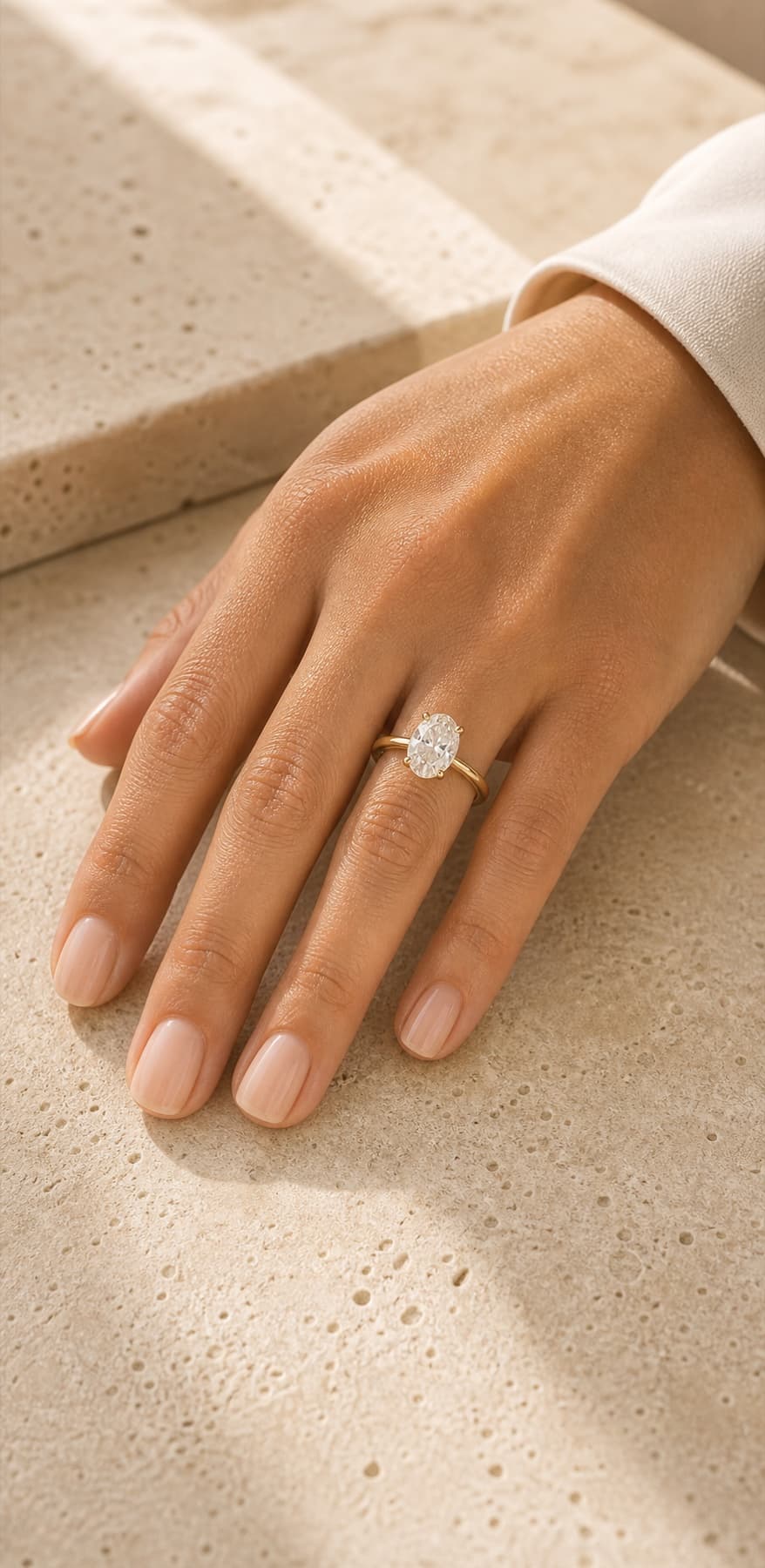
I’m Andrew Gonzalez, and the solitaire is the ring I build most often for San Diego couples. It’s also the one where cutting corners shows fastest. With no halo or side stones to distract, the diamond does all the work, so the money belongs in the stone and the craft belongs in the proportions around it. A showroom will happily sell you a solitaire off the shelf in twenty minutes. I’d rather spend that time choosing the diamond it deserves. For the design thinking behind the style itself, see the Classic Solitaire design direction.

30+ years of experience building custom engagement rings, wedding bands, and custom jewelry. GIA Diamonds Graduate. Designed and built in the USA.

Text Andrew a Photo

What I’ll want to know

  1. The shape she's drawn to, or the one she keeps pointing at.
  2. The number you'd be comfortable with. In a solitaire it nearly all goes into the stone.
  3. How she uses her hands. It sets the height and the prongs.

What gets decided

When the ring is simple, the diamond can’t be.

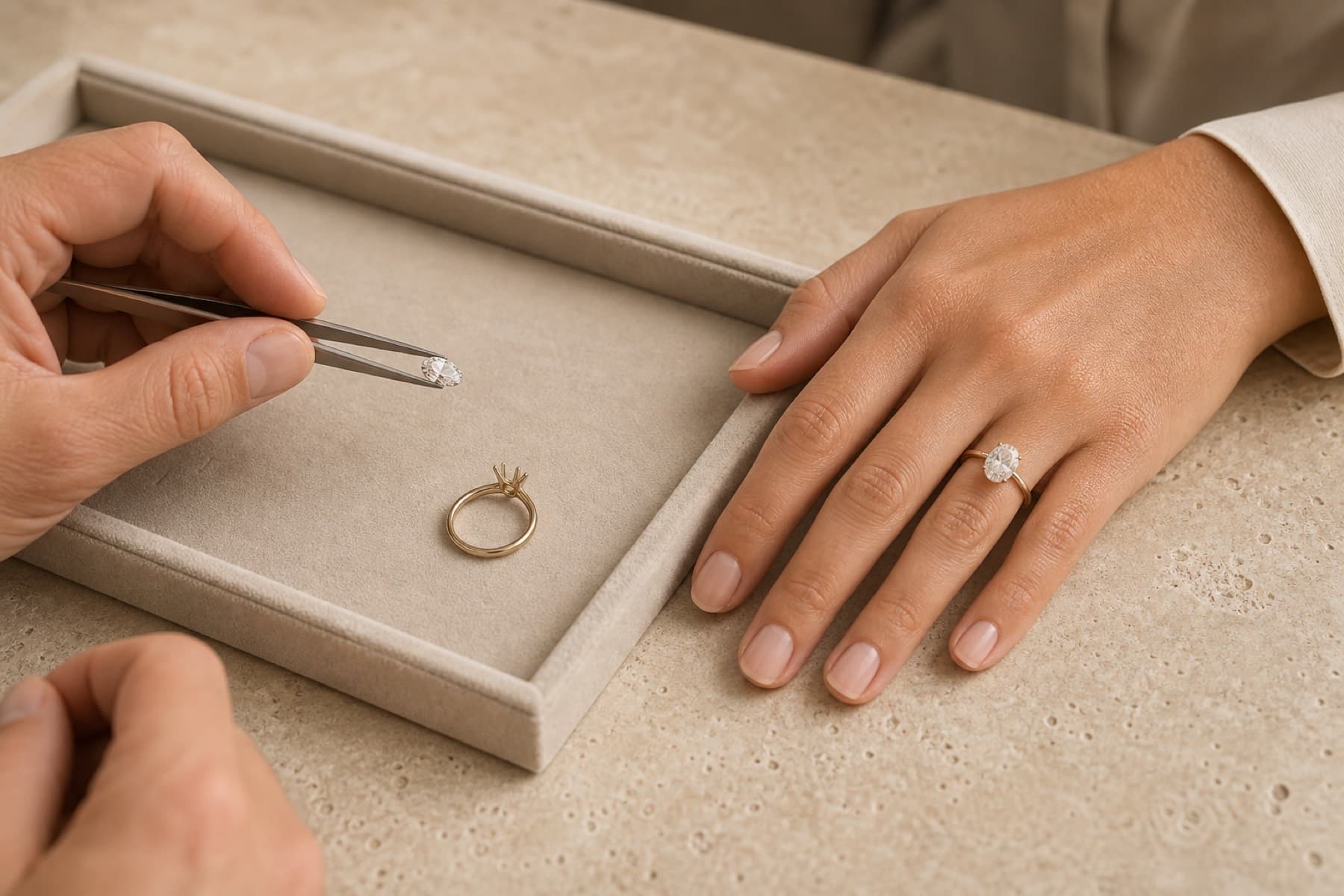
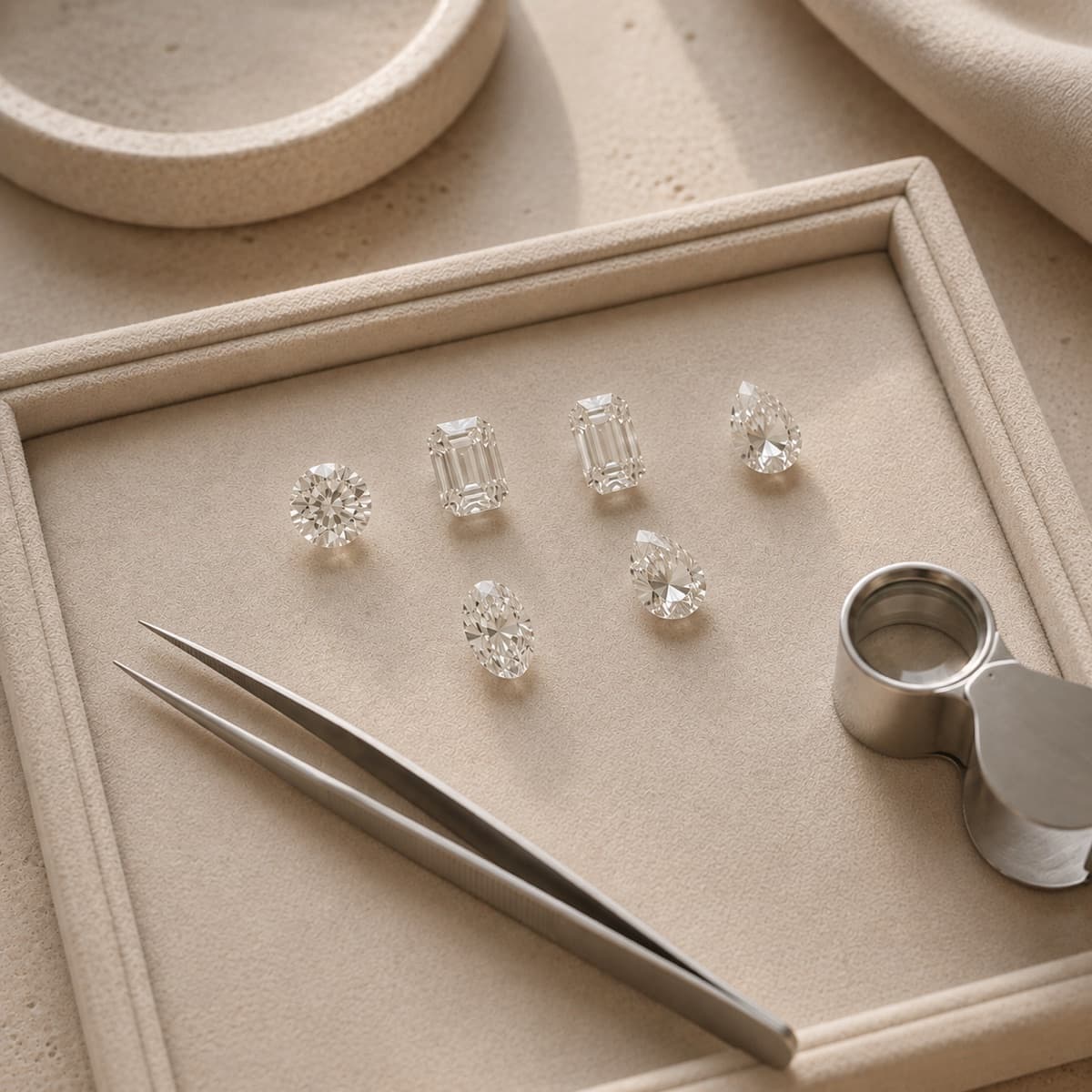
A solitaire puts the center stone under permanent close inspection, so we choose it the same way: real candidates on the desk, a loupe in your hand, natural and lab-grown compared honestly. The design gets your approval before production, and nothing here is pre-made waiting to be moved.

Why the solitaire rewards buying well

Every dollar not spent on tiny accent diamonds and metalwork can go into the center diamond, which is the part people actually look at for the next forty years. That’s the quiet economics of the style: a solitaire budget buys a noticeably better or larger stone than the same budget spread across a detailed setting.

It also means stone flaws have nowhere to hide. A slightly milky diamond or an off-center inclusion that a busy halo would camouflage is fully visible in a solitaire. The report won’t flag either problem clearly. Eyes will.
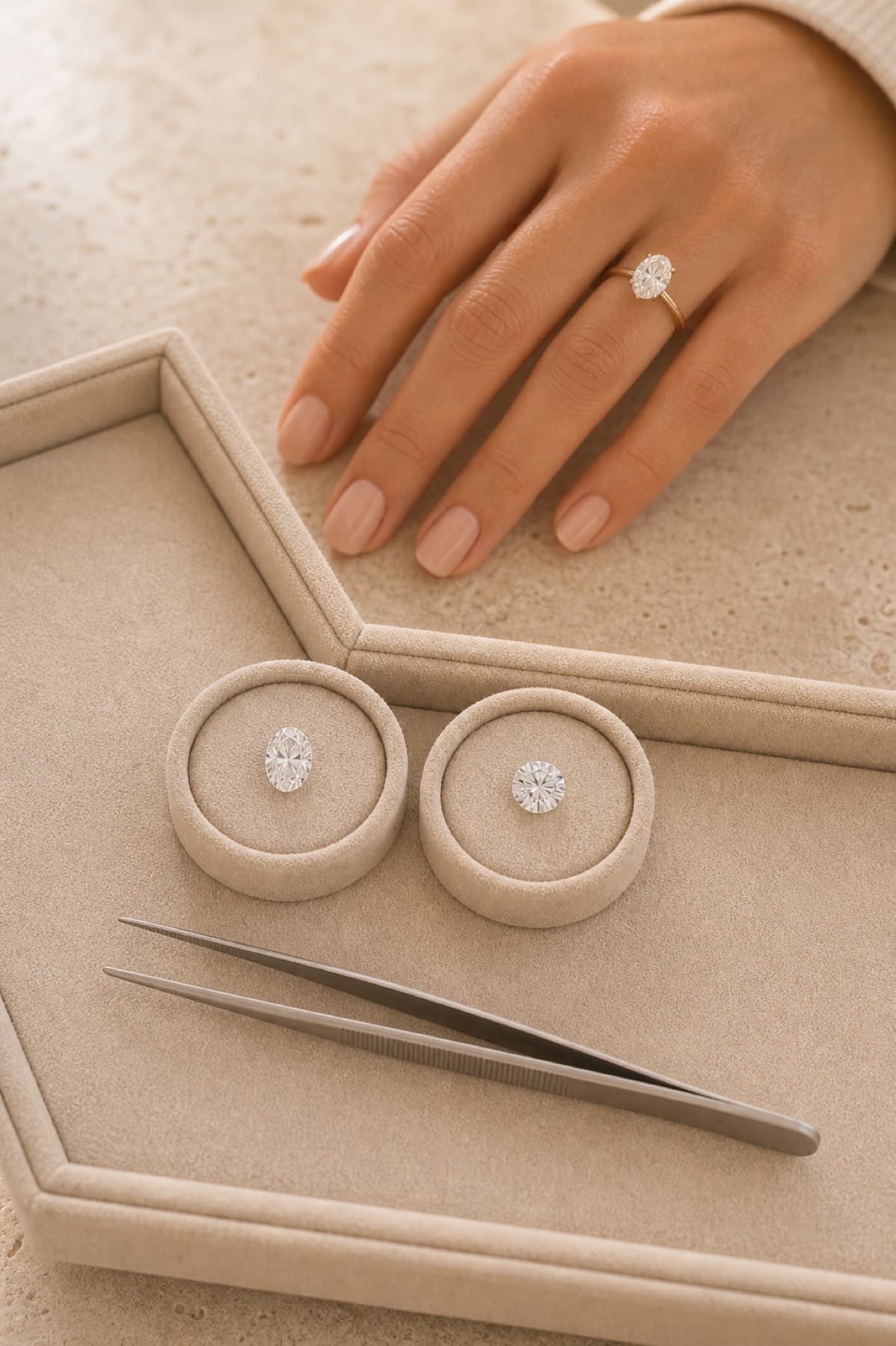
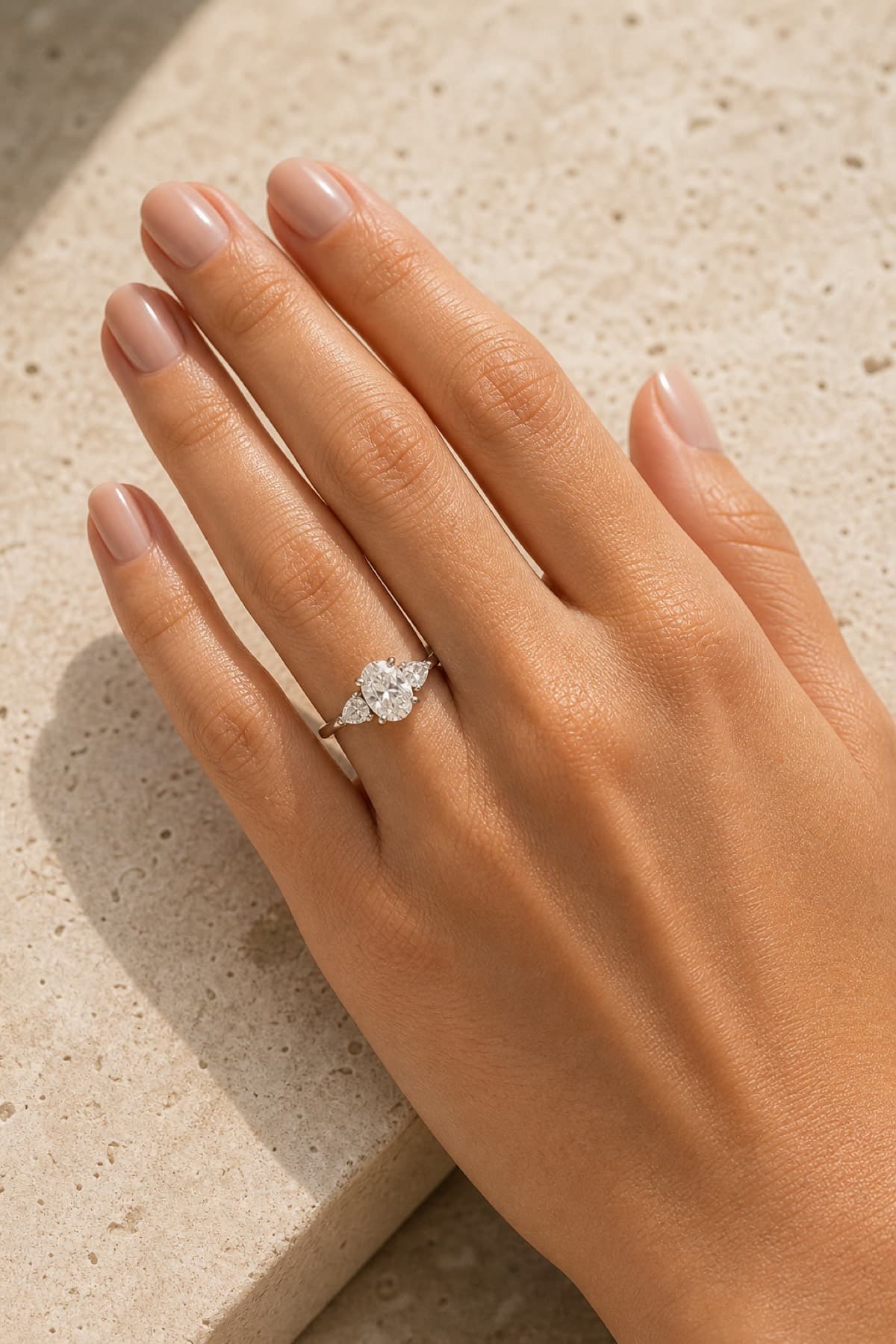
Two solitaire candidate diamonds compared side by side
AI-generated inspiration imagery.

Choosing the stone: natural, lab-grown, and every shape

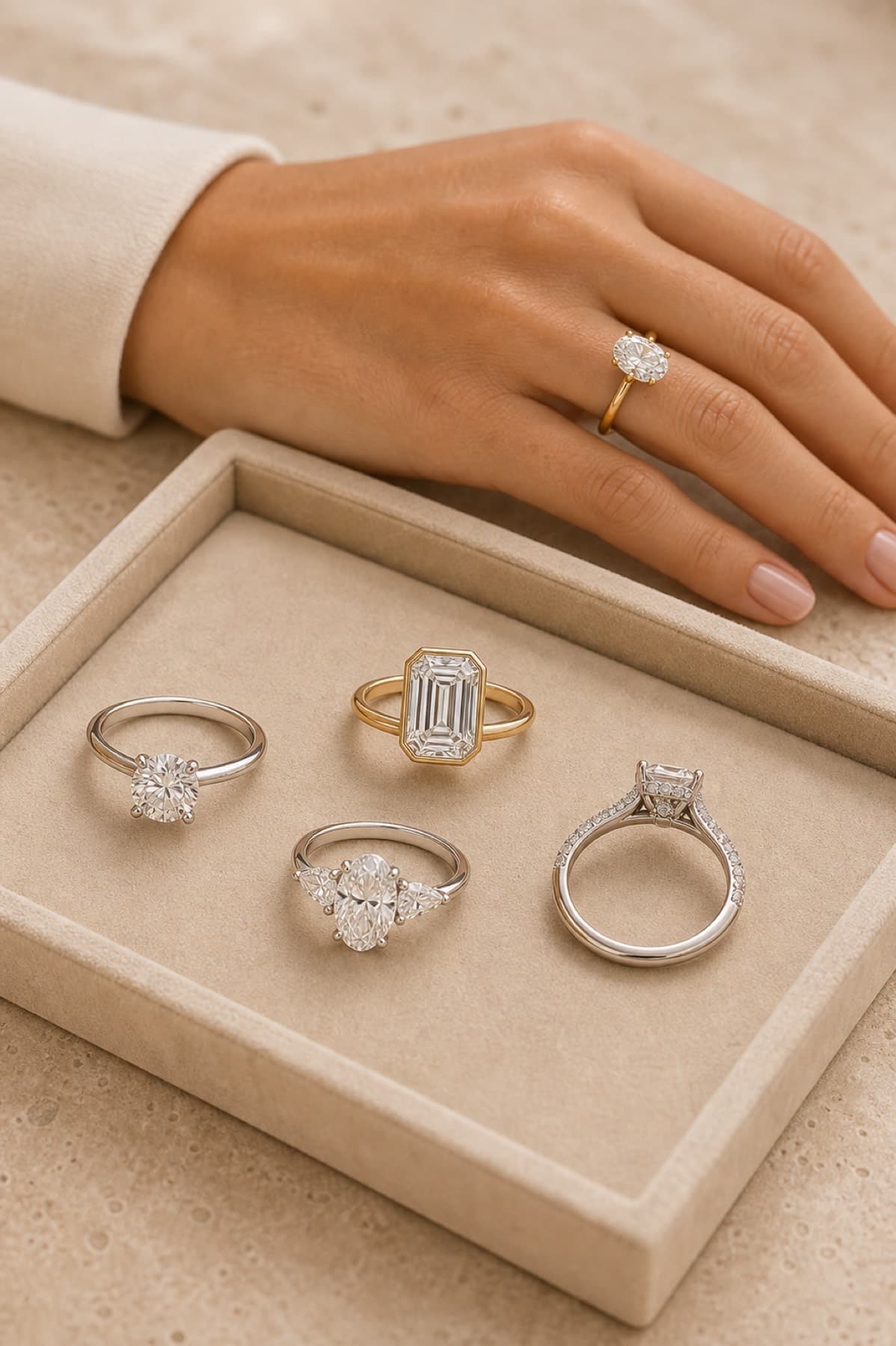
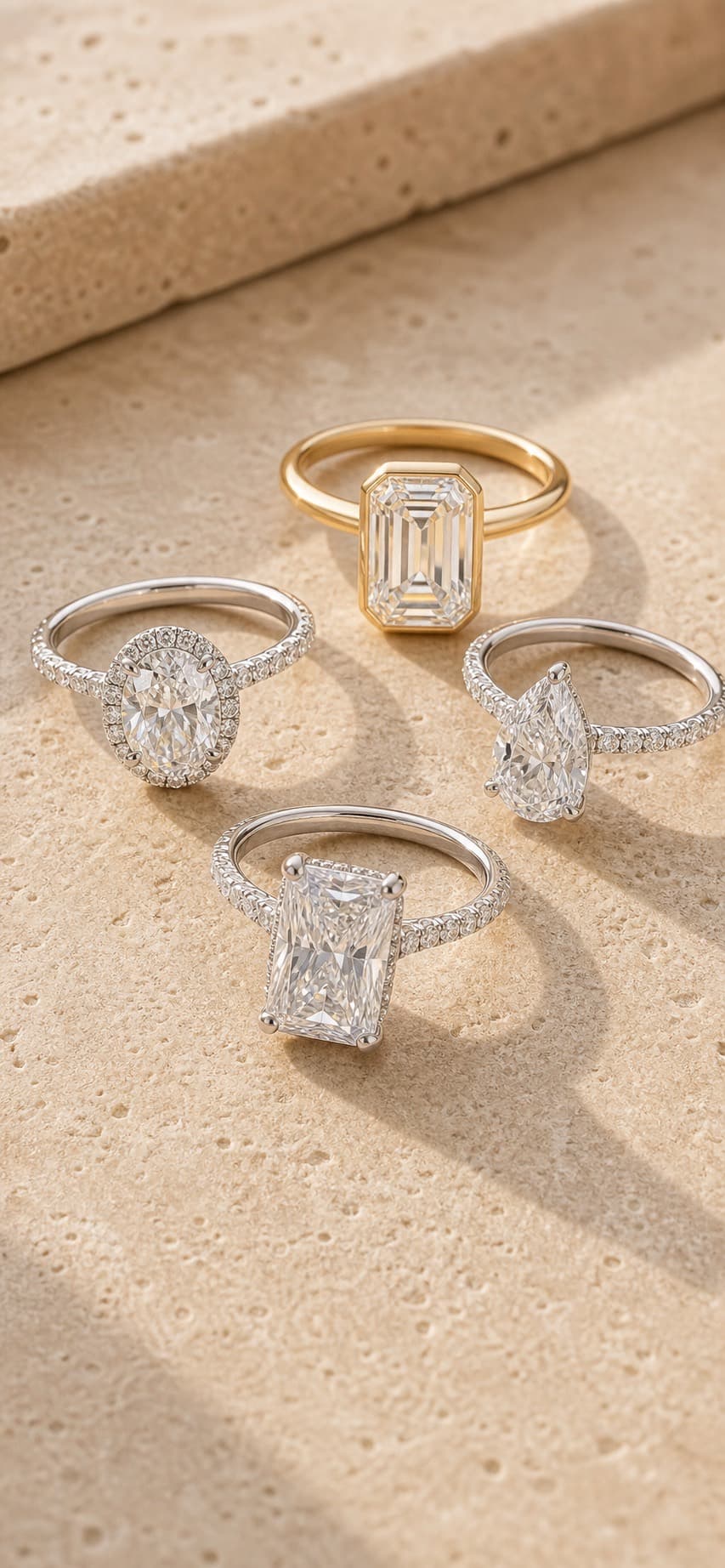
A solitaire takes almost any center shape: round, oval, cushion, emerald, radiant, pear, marquise. Round is the classic and carries the price premium to match; the elongated shapes stretch the budget further face-up. I source certified stones for whichever direction you’re leaning, and I’ll put a natural and a lab-grown option of the same target look side by side whenever the question is open.

Everything happens one-on-one, one couple at a time, by photo and video or in person if you’d like. You review the shortlist, keep what earns its place, and send back what doesn’t. If the honest answer is to wait for a better stone, that’s the answer you’ll get.

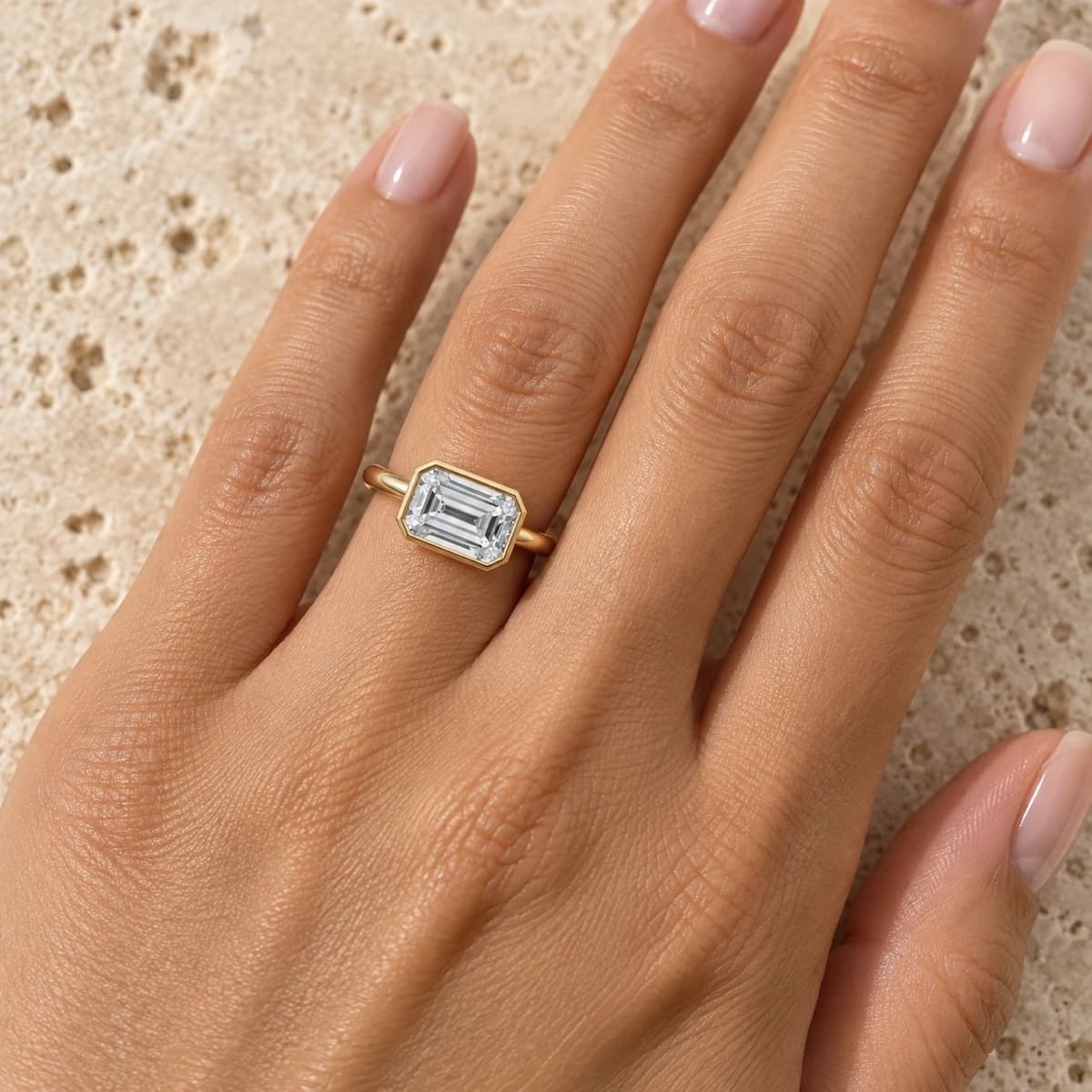
Loose diamonds in several shapes on a jeweler's tray
AI-generated inspiration imagery.

The details that keep a simple ring from being generic

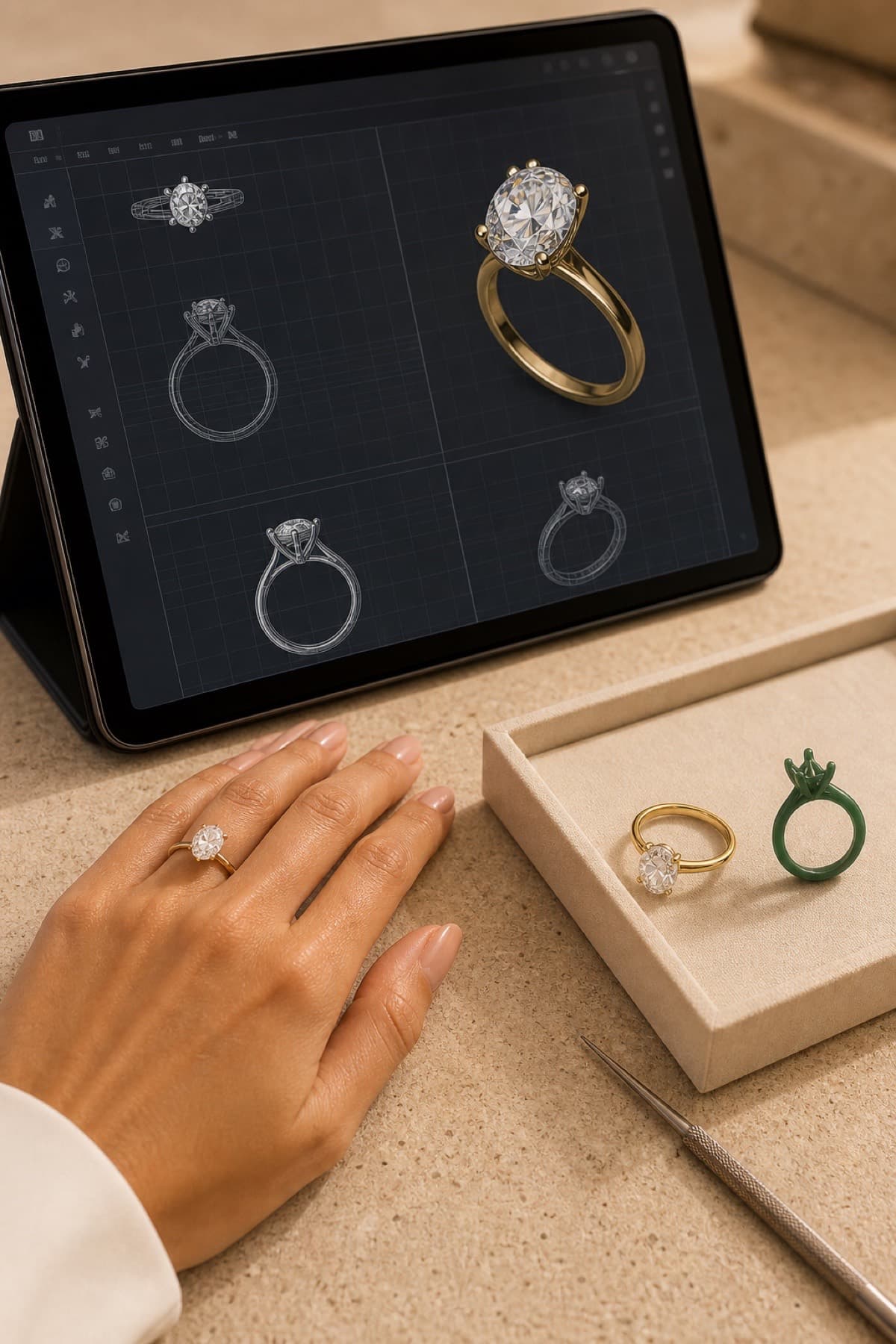
Once the diamond is chosen, the remaining decisions are small but visible every day: prong count and shape, basket height, band width and profile, metal color against the stone. The side view matters as much as the top view, because that’s the angle everyone else sees.

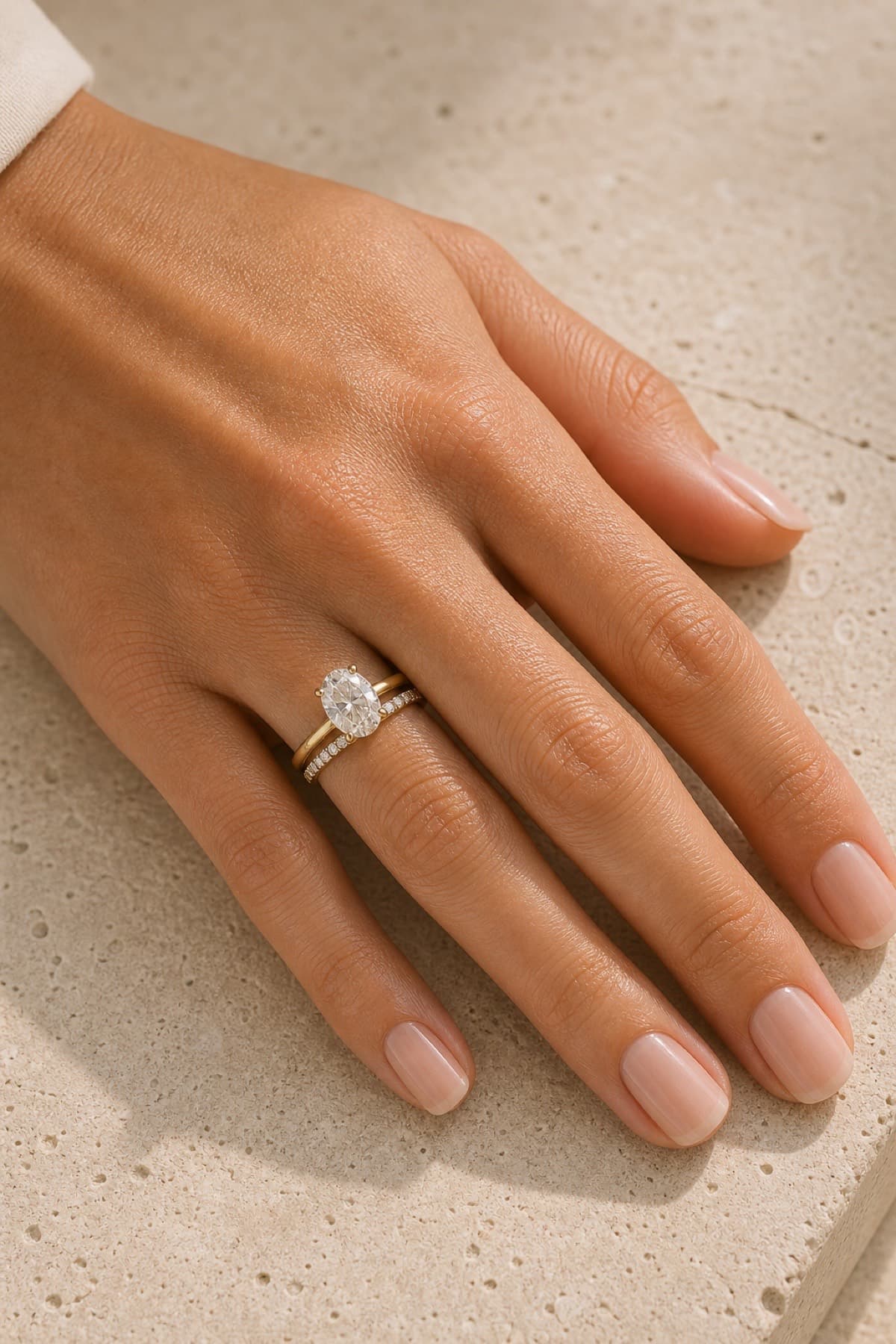
The wedding band belongs in the plan from day one. A solitaire built with band clearance in mind stacks cleanly for decades; one built without it argues with every band you try. You approve the full design, band plan included, before anything goes to production.

  • Prong style tuned to the stone: four, six, or compass placement.
  • Basket height set for comfort and flush band fit.
  • Band profile from knife-edge to fully rounded, sized to the hand.
  • Metal chosen against the actual diamond’s color, not a chart.
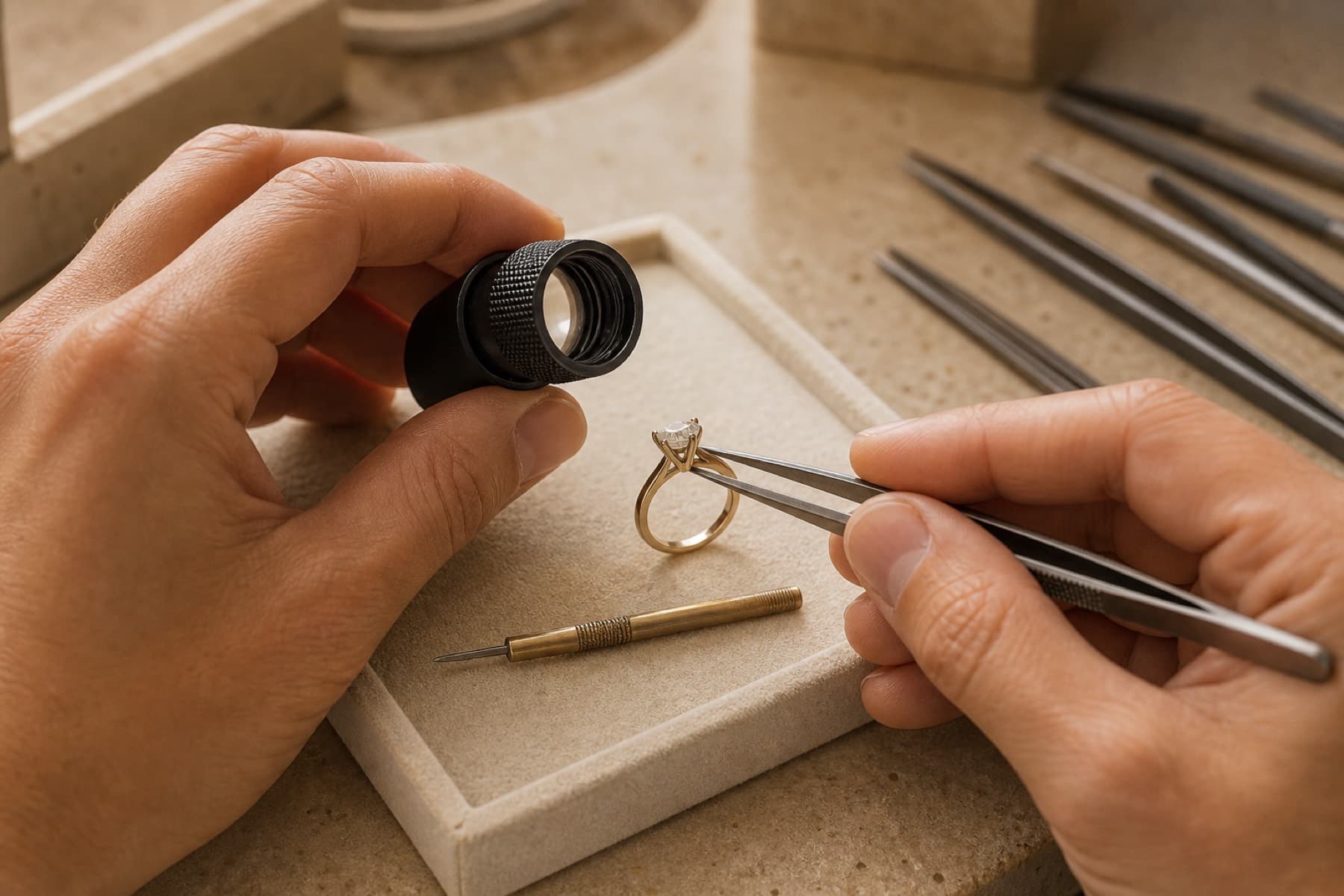
A jeweler's hands finishing the details of a solitaire
AI-generated inspiration imagery.

Designed and built in the USA

Made by master jewelers. Built to last a lifetime.

A lot of jewelry sold today, custom or not, is mass-manufactured and imported. Everything we make is made here in the United States, by master jewelers and U.S. manufacturing partners who are the best at what they do. Quality comes first, because this is something you’ll wear every day for the rest of your life.

That’s where the value is. Working directly with me often costs less than a big-box jewelry store, and the quality is in a different class.

Text Andrew a Photo

What quality looks like on your hand

A diamond worth the work

Natural or lab-grown, from the best sources I know, and chosen by eye so the stone lives up to the ring around it.

The right height

Set so it doesn’t catch on sweaters or hair, and doesn’t hide the stone either.

Strong, even prongs

Thin or uneven prongs are how diamonds get lost. These are formed to hold for decades.

A clean finish

Smooth wherever it touches skin, and clean where light enters the stone.

A band that fits beside it

Made so your wedding band sits flush against it, with no gap.

Inspiration, not inventory

Design directions to customize

View all directions

In their words

“Second time around for me, and I wanted it done quietly and done right. One meeting downstairs at the Jewelers Exchange, straight answers, a written number, no theater. It’s a better ring than anything I saw the first time at twice the price.”
Brian · Engagement ring, second marriage

Questions couples ask before they start

Is a solitaire cheaper than a halo or pavé ring?

The setting itself usually costs less, but most couples reinvest the difference in the center stone, and that’s generally the right call. The setting can be remade in ten years if tastes change. The diamond is the part you keep.

Does lab-grown versus natural matter more in a solitaire?

The origin question is the same, but the visibility is higher: whatever stone you choose is fully exposed, so cut quality and transparency matter more than they would under a halo. I compare both origins at the same visual standard and price each path plainly so you can decide without pressure.

How big should the diamond be for a solitaire?

As big as looks right on the specific hand, and not a fraction more than the budget honestly allows. Face-up measurements matter more than the carat number; a well-cut stone can outmeasure a heavier, deeper one. We look at real sizes on the hand before deciding.

What is a solitaire engagement ring?

One stone on a band, nothing else. It is the default engagement ring for good reasons: every dollar goes into the diamond people actually see, any wedding band pairs with it, and it never dates. The whole game is choosing that one stone well, because nothing is there to cover for it.

Text Andrew

Text Andrew the ring style you keep coming back to.

A photo, sketch, or even a rough idea is enough to start. I can usually tell you whether the smartest path is a sourced diamond, a modified setting, a CAD build, or a short call to compare options.

Prefer a call or text?

Prefer to reach Andrew now? Call or text 619-279-7738.

By submitting, you are asking Luxury Custom Jeweler to contact you about your inquiry. See our Privacy Policy.

Andrew Gonzalez, GIA Diamonds Graduate
Trained by GIA to judge a diamond by eye, not just by its report.
30+ years in jewelry
Choosing diamonds and building custom jewelry, every week.
Designed and built in the USA
All our custom jewelry, made here by master jewelers and U.S. partners.
The price in writing first
A written plan and a real number before any deposit.