

Nothing competes with the center stone
A solitaire keeps the design quiet, so diamond size, cut personality, and proportion are easier to appreciate.
Inspiration, not inventory
A focused, minimal ring that lets the diamond carry the emotion, proportions, and light.
A solitaire still needs careful decisions. The shoulder shape, prong placement, basket design, and band width should be balanced around the diamond instead of copied from a stock mounting.

Best for
Clean, diamond-first design
Diamond shape
Round or almost any center shape
Setting path
Selected setting, modified setting, or CAD
Custom complexity
Low when the foundation is right
Why this direction works
Andrew uses the inspiration image to decide what needs to be selected, modified, or built from scratch so the ring feels right in real life.
A solitaire keeps the design quiet, so diamond size, cut personality, and proportion are easier to appreciate.
Band profile, prong style, basket shape, metal color, and setting height all change the feeling of a simple ring.
A thoughtfully built solitaire can support a plain band, pavé band, contour band, or more substantial anniversary stack later.
You don’t need to know a single one of these words yet. Send the photo, and Andrew walks you through every choice in plain English, with real examples in front of you, until the ring is exactly right.
01
A solitaire is one stone doing all the work, so the stone is everything: the shape (round, oval, cushion, and more), how large it actually looks on the hand, and how it behaves in real light. Natural and lab-grown, compared side by side.
02
The band can be a crisp thin edge, a soft rounded dome, or a graceful arch rising toward the stone. Plain metal keeps it timeless; a whisper of tiny diamonds adds light. Yellow, white, rose gold, or platinum, decided against her skin tone and the jewelry she already wears.
03
The part photos never show and she sees every day: how the diamond is held (the little claws are called prongs), how high it sits, and whether a wedding band will rest flush against it later. Andrew designs this view as carefully as the top.
What Andrew would compare
I would not choose a solitaire by top view alone; the side profile matters every day.
I would compare prong placement because it can make the same diamond feel softer, sharper, or more secure.
I would keep the setting simple only when the simplicity is actually doing something for the stone.
A solitaire makes the diamond selection more visible. Natural and lab-grown diamonds should be compared in the same shape and size goal so the choice feels clear rather than theoretical.
Many solitaires can begin with an existing setting and be refined. CAD is useful when the diamond dimensions, side profile, or wedding band plan need a more exact fit.
A solitaire is usually easy to wear when the height is controlled and the prongs are shaped well. The cleaner the design, the more each small construction detail shows.
A straight wedding band may fit cleanly if the basket allows clearance. If the setting is very low, a contour or slight gap may be part of the design decision.
What to text Andrew
A photo, saved post, rough sketch, or short note is enough. Andrew can help decide whether the best path is selecting the exact diamond, modifying a setting, or using CAD only when the design needs it.
Keep comparing

A graceful oval center stone with clean metal, generous light, and a shape that feels romantic without becoming ornate.
Customize this direction
A round brilliant diamond set in a slim bezel for a clean, modern ring with soft protection and quiet presence.
Customize this direction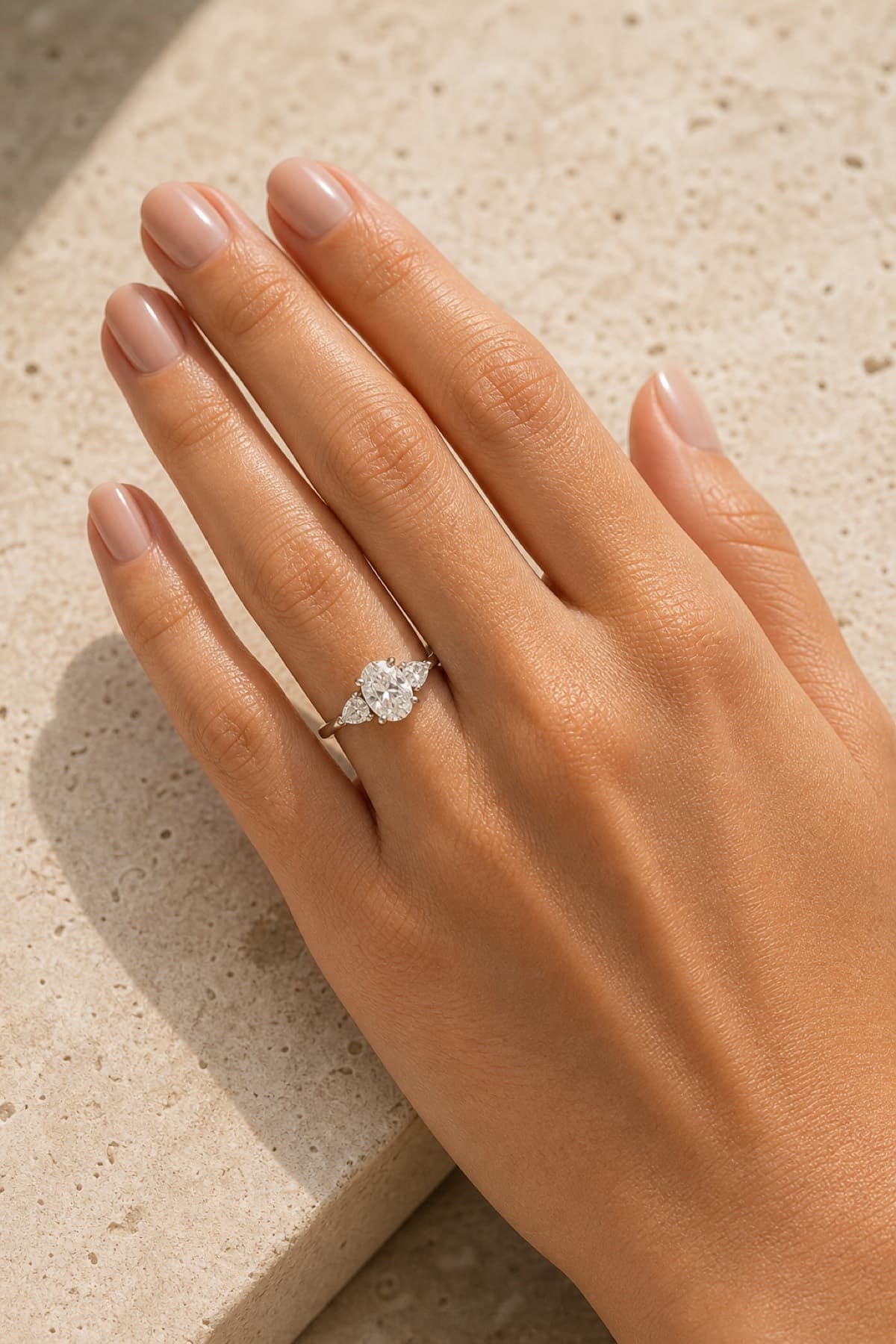
A center diamond framed by two supporting stones for presence, meaning, and beautiful side views.
Customize this direction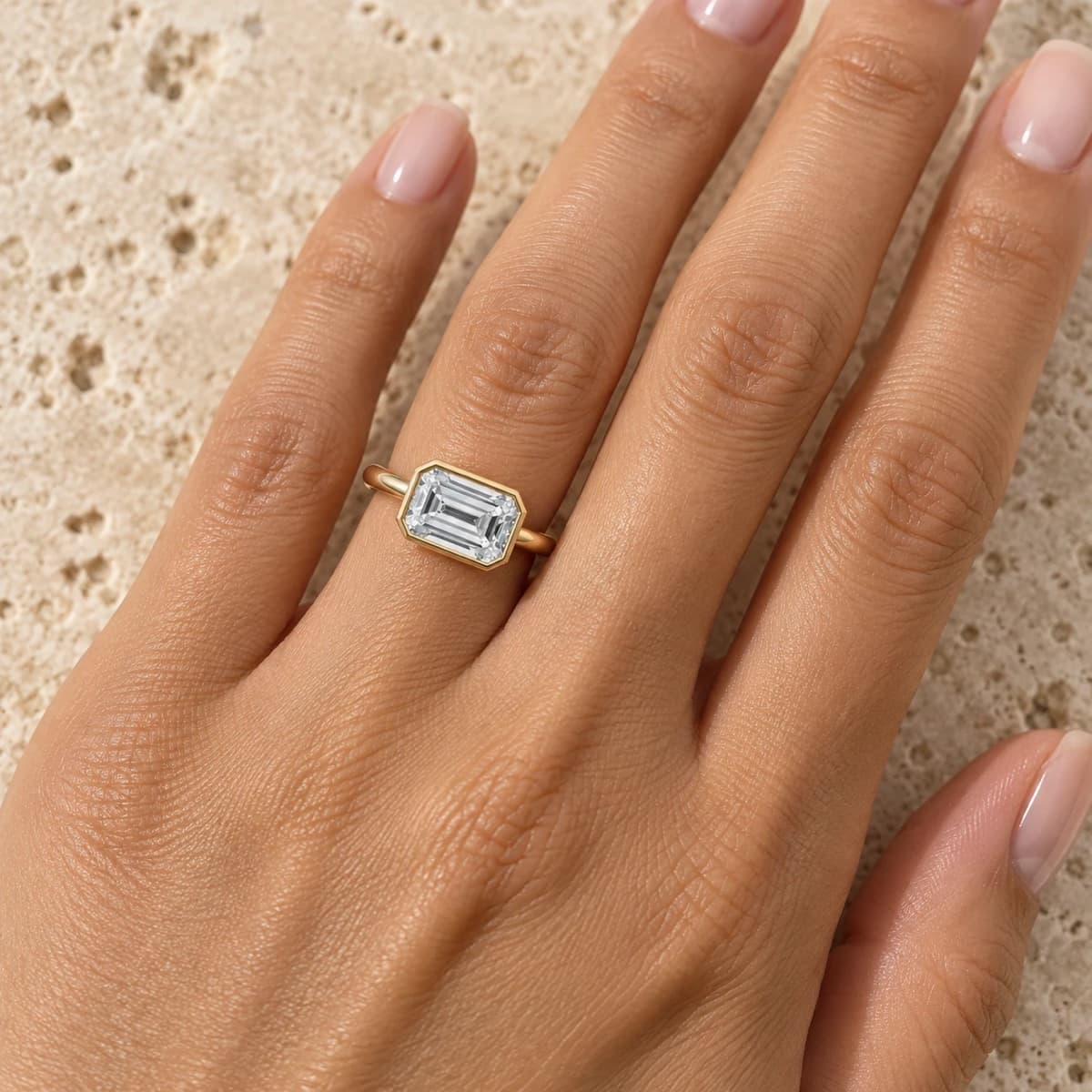
A center stone set horizontally for a lower, modern line across the finger.
Customize this directionUseful guides
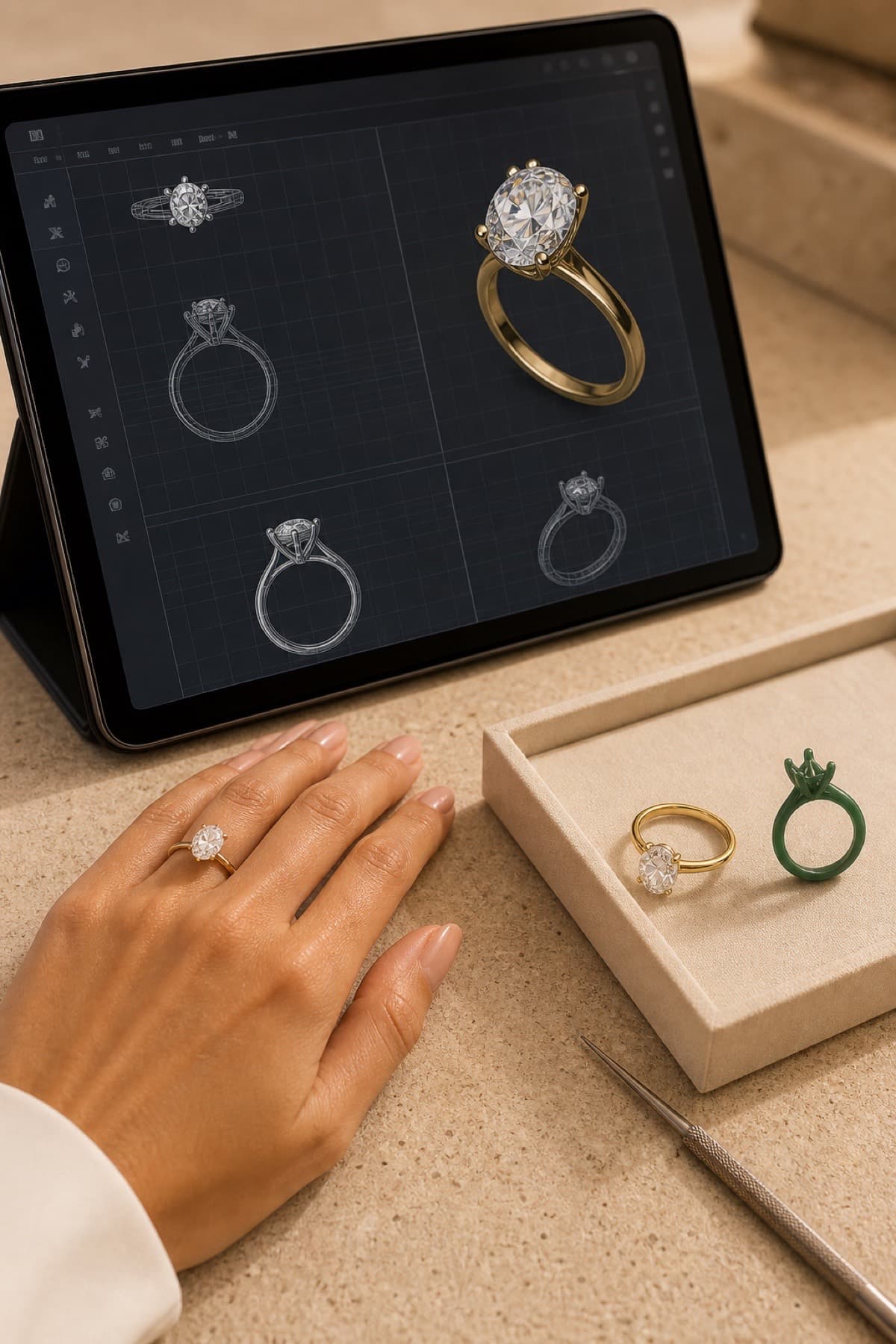
Custom doesn't automatically mean CAD. The three levels of custom, four worked examples, what each does to the cost, and the decision test I actually use.
Read guide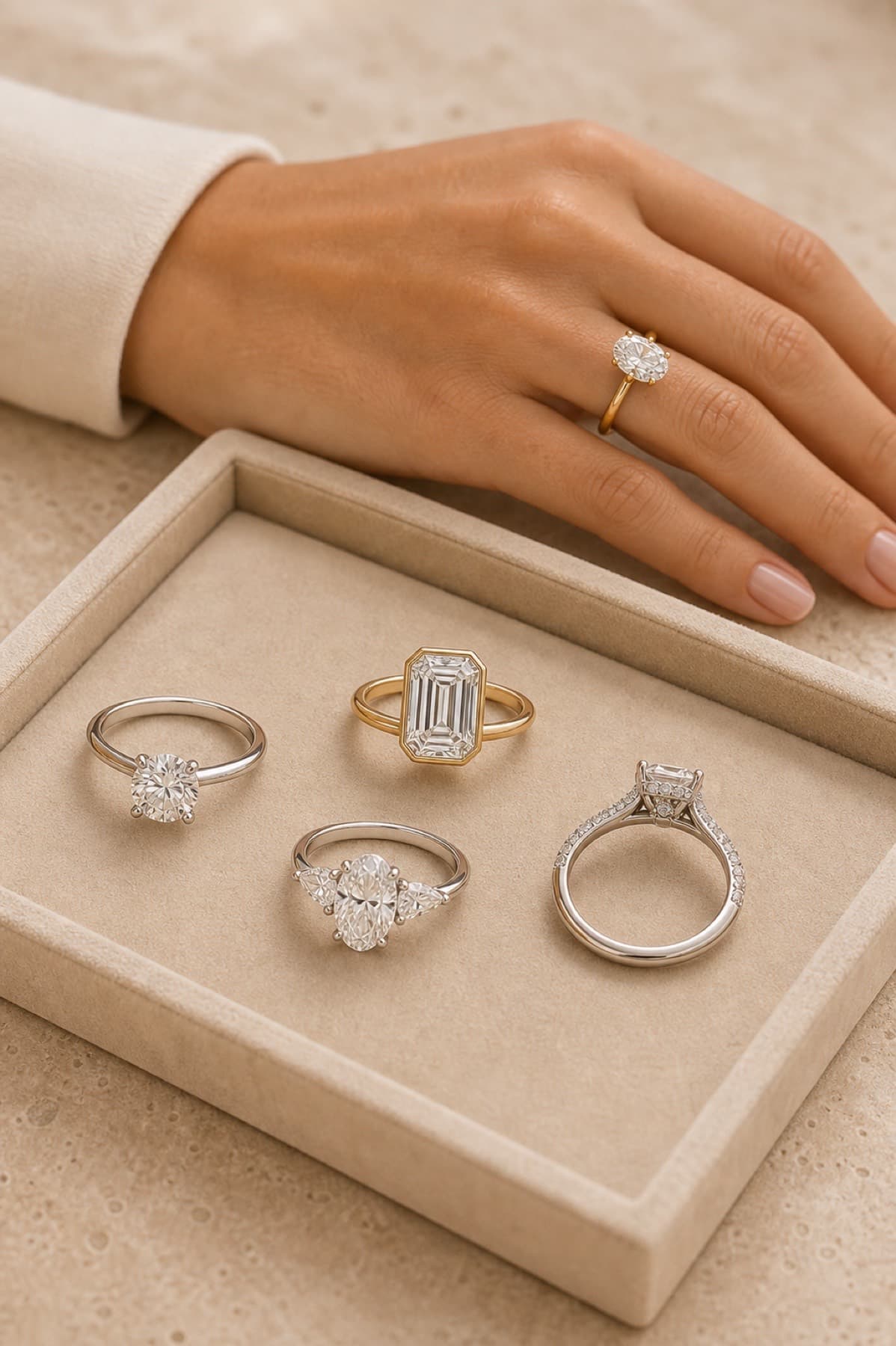
Solitaire, halo, pavé, bezel, three-stone: every setting term in plain English, plus the side-view and lifestyle questions that decide how a ring wears.
Read guide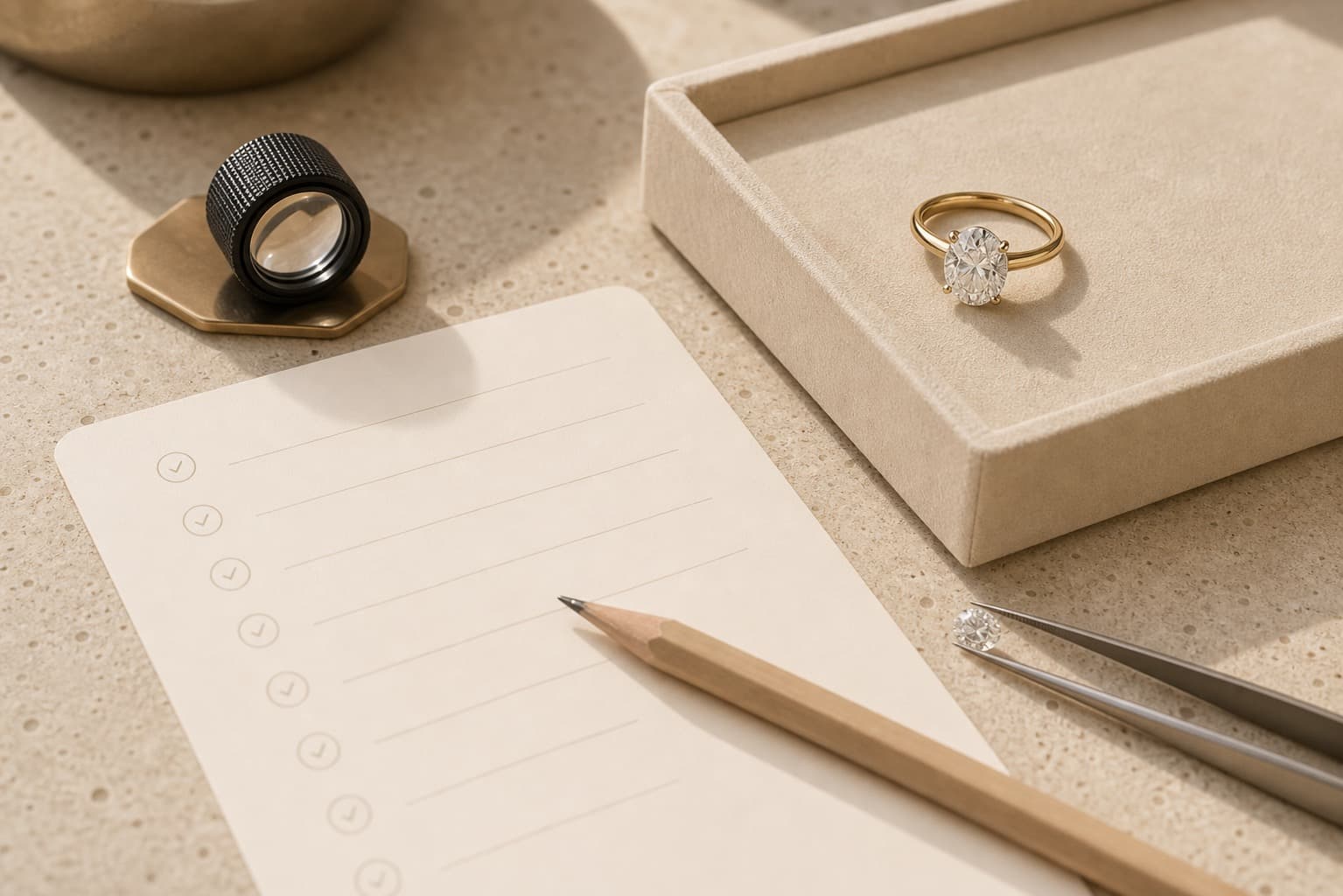
A step-by-step checklist for buying a custom engagement ring in San Diego, from inspiration photos to diamond selection and final approvals.
Read guideWant the full page on this style, from the stone to the price?
Classic Solitaire engagement rings in San DiegoIn their words
“I had about three weeks before I shipped out and every store quoted me six to eight. Andrew asked for my date, said that’s doable, and the ring was in my hand in 17 days. She said yes with time to spare.”
No. Custom can mean selecting the exact diamond and tuning the setting around it. A simple ring still deserves careful proportions.
Yes. Oval, cushion, radiant, pear, emerald, marquise, and other shapes can all be treated as solitaire directions.
That depends on the diamond, the metal color, and the visual goal. White prongs can visually recede around a diamond, while matching gold can feel warmer and more intentional.
Focus on the diamond, side profile, band width, prong style, and how the wedding band will sit. Those choices make the ring feel made for the wearer.
Text Andrew
Text Andrew the photo or style you keep coming back to. He can help translate it into a diamond choice, setting path, and next step without treating the inspiration as inventory.