
Guide
How an Engagement Ring Is Made
By Andrew GonzalezGIA Diamonds Graduate9 min readUpdated
People ask how an engagement ring is made and usually mean two things: the physical process, from a stone and an idea to a finished ring on a hand, and the practical one, what they'll actually be asked to decide and approve. This is both, in order, the way I run it. No step is mysterious, and none of it requires you to know jewelry vocabulary.
What you already know
Everything starts with what you already know: a photo she saved, a shape she keeps mentioning, a ring she tried on, a family stone, or a word like low, simple, vintage, or bold. I add three questions: the number you're comfortable with, whether there's a date, and how she'll wear it. That's enough to map the ring.
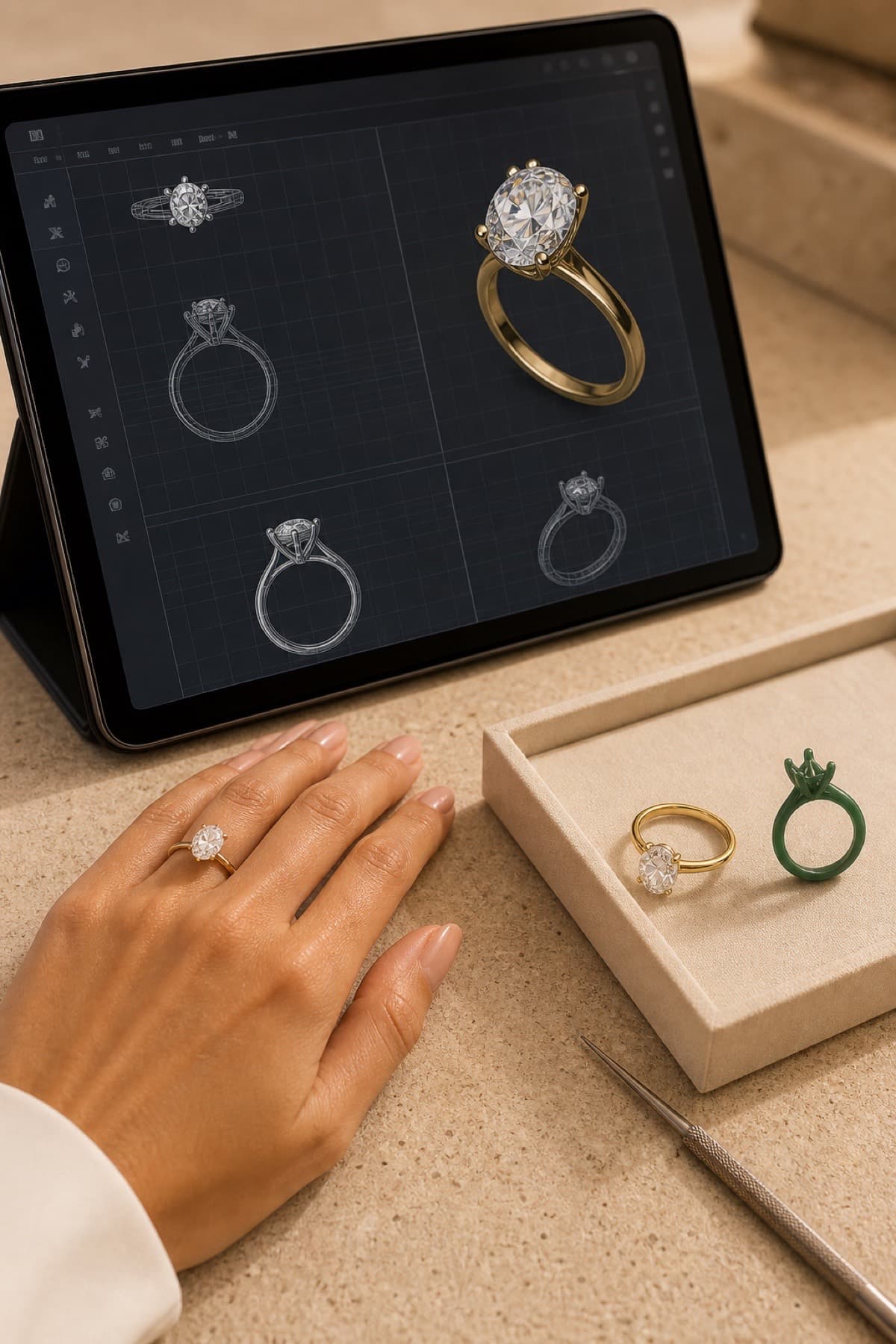
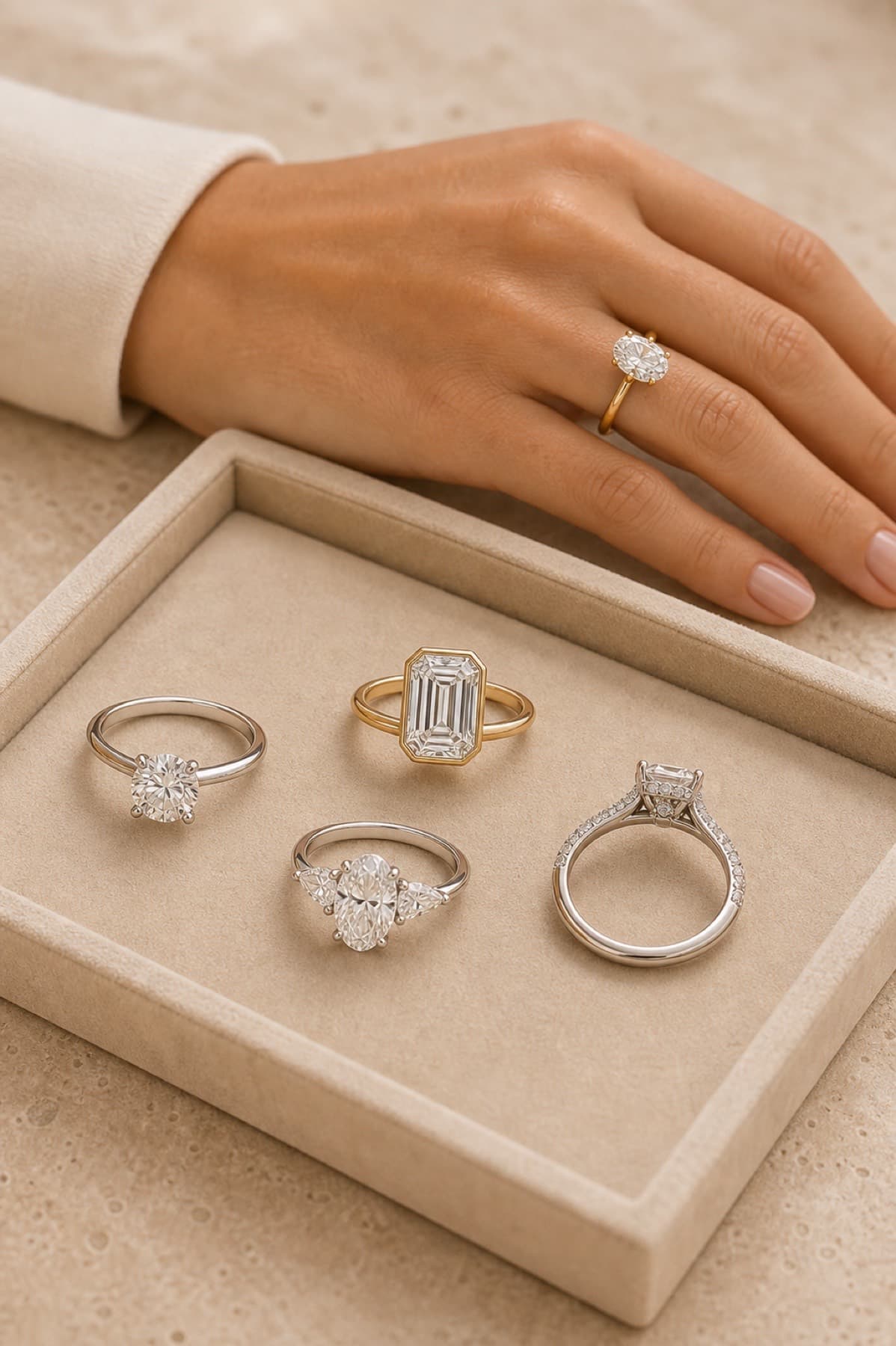
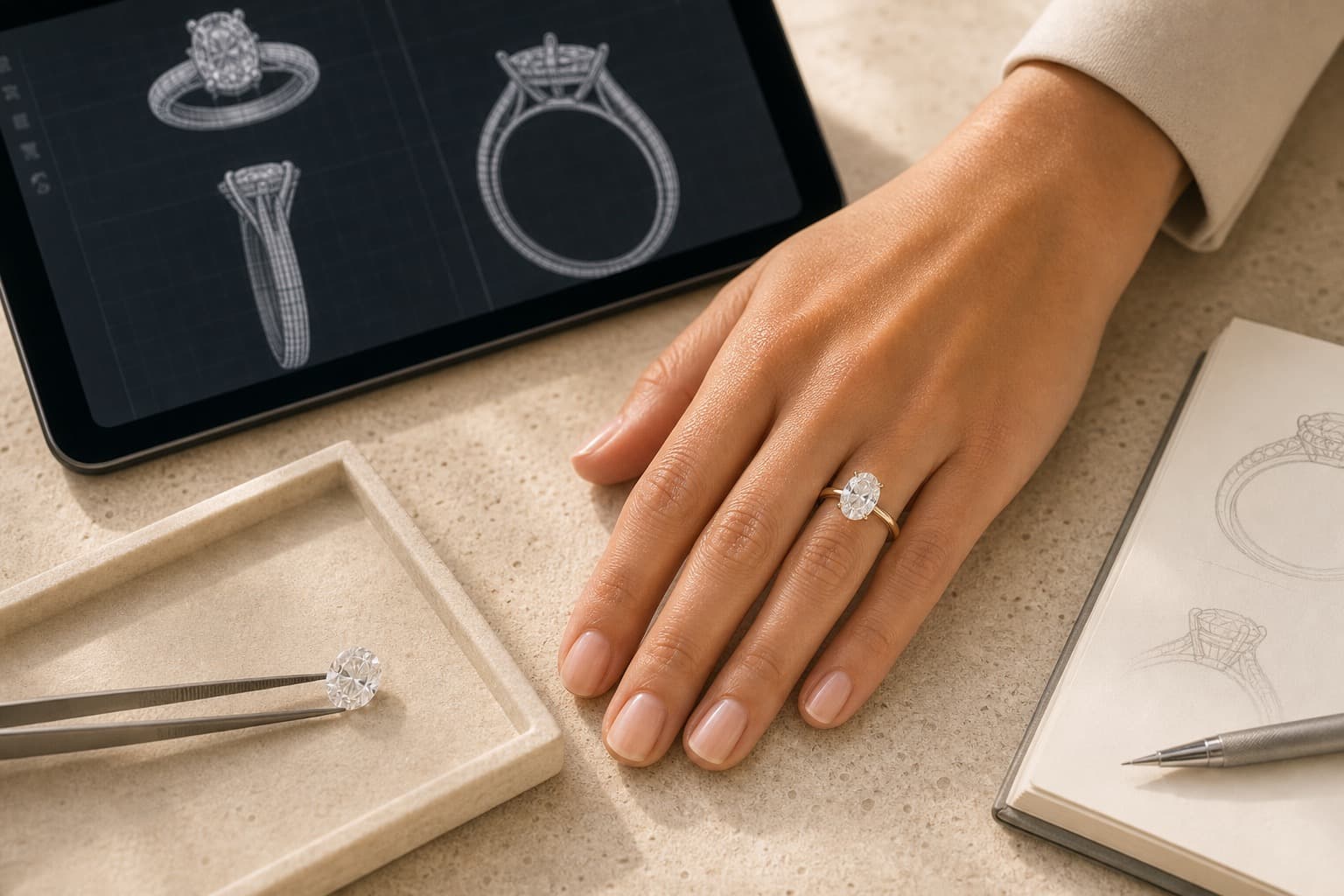
Custom doesn't mean starting from a blank page. What you tell me decides whether the ring wants a proven setting with the right stone in it, a modification, or a full build in CAD, a precise 3D model of the ring drawn on screen, and I'll say which before anything else is decided.
The stone
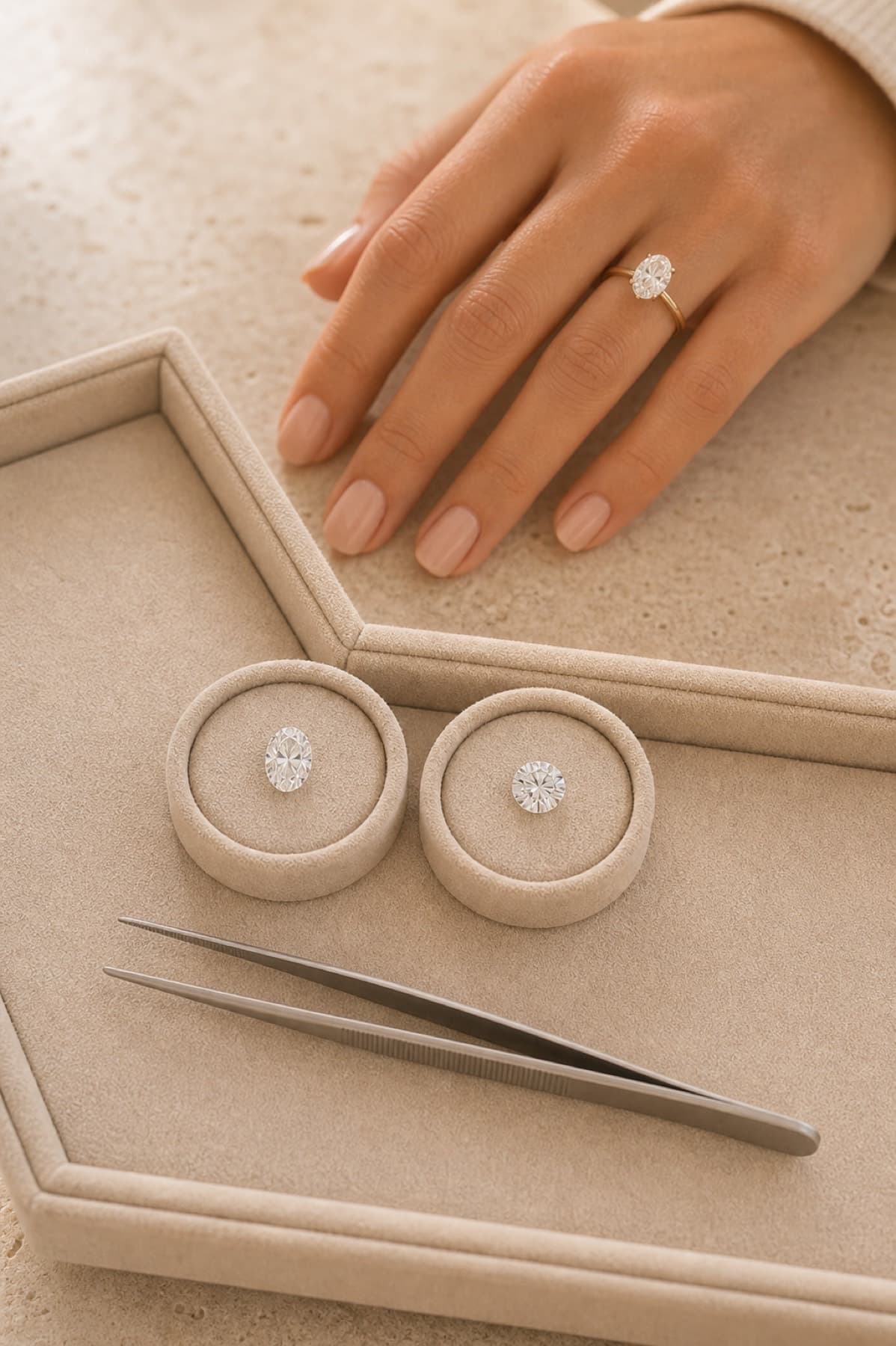
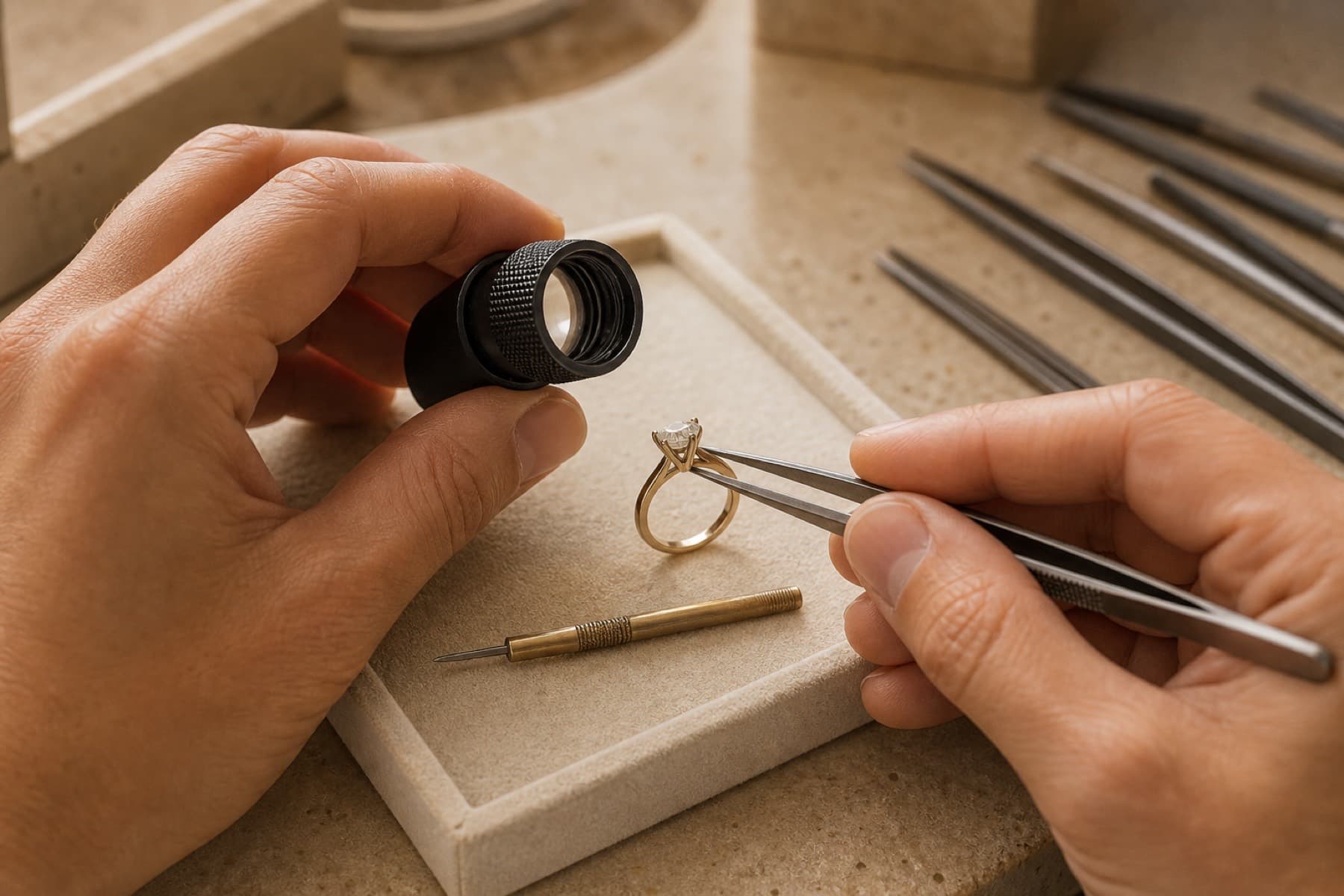
The stone is most of the money and all of the sparkle, so it comes before the setting. I don't pull from a case or a list. I tell brokers I've bought from for thirty years exactly what I'm looking for, they send candidates, and I send back everything whose report flatters it. What's left is two or three stones that genuinely compete at your number.
Then you see them. Side by side on a white tray, reports beside them, face-up and in profile, photographed and filmed for you, or on the desk in front of you if you'd rather come in. The differences that matter show up in seconds, and they are mostly the ones the paper never records. You choose; I tell you which I'd buy and why.
- Natural and lab-grown both sourced the same way, judged by eye.
- Cut and face-up size first; grades you can't see without a loupe last.
- The report is checked against the stone, by you, before anything moves forward.
The design
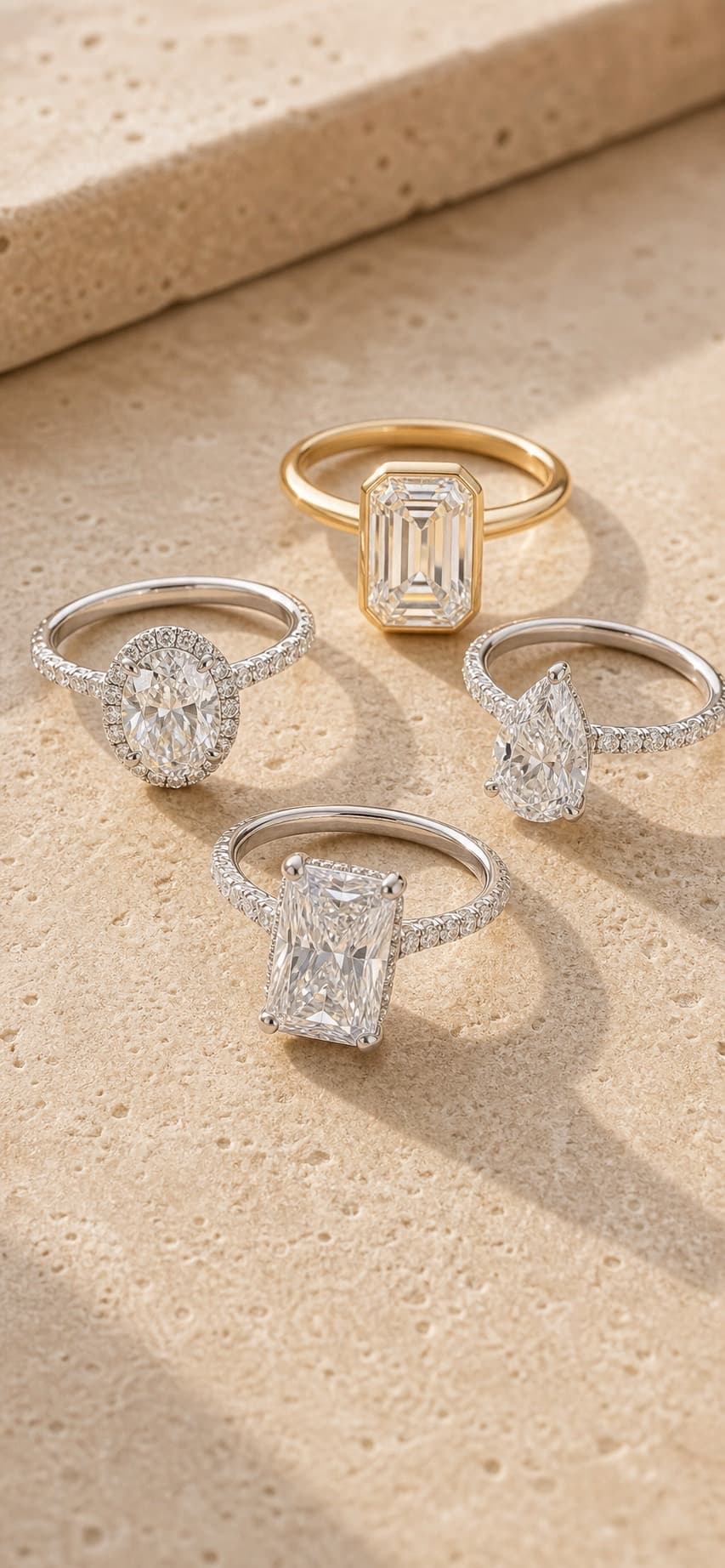
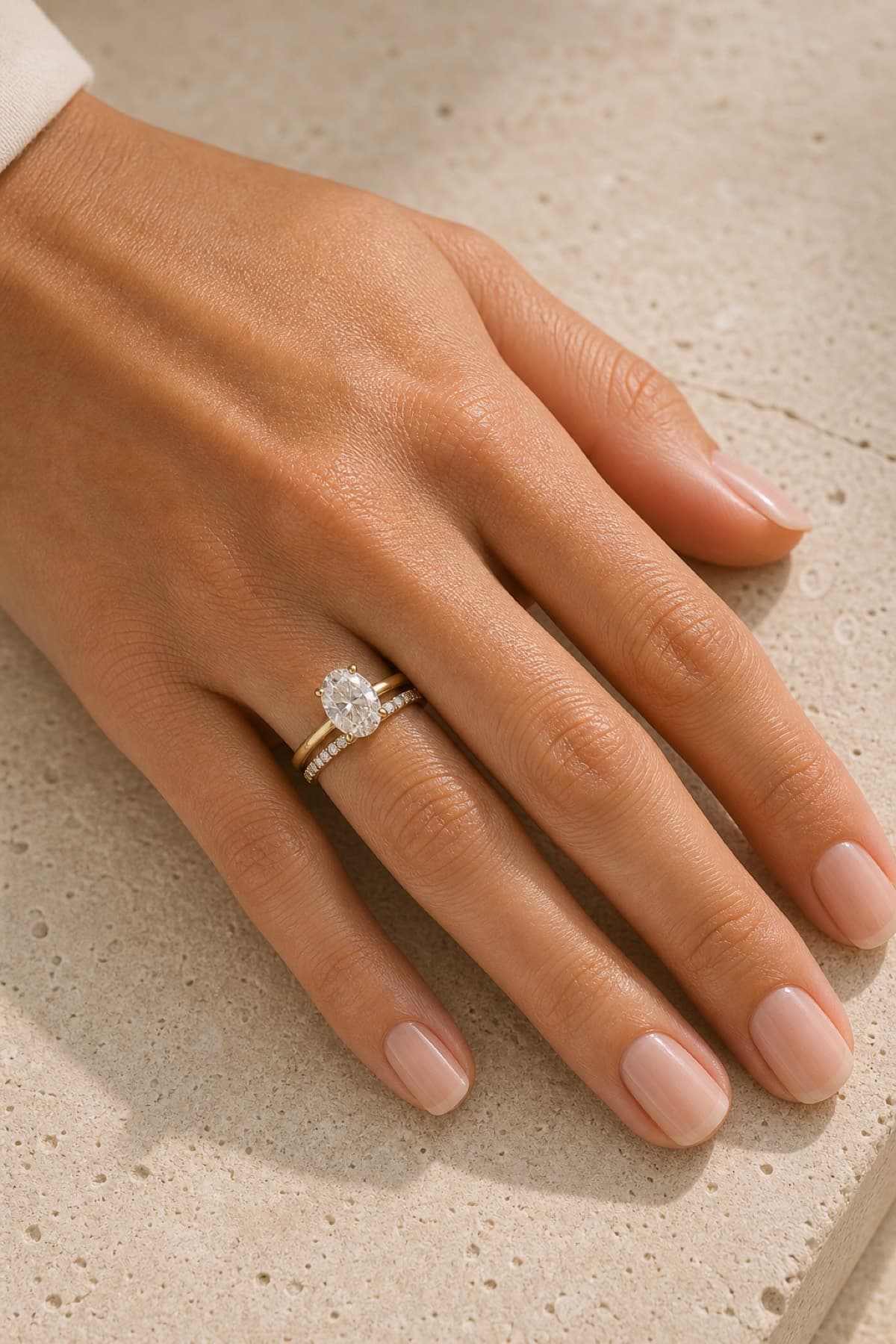
With the stone chosen, the setting gets designed around its exact measurements. For a proven design, that means sizing the head and the basket, the parts that grip and cradle the stone, and deciding the profile, the band width, and whether the stone is held by prongs, the small metal claws, or a bezel, a rim of metal wrapping its edge. For a modified setting, it means changing the parts that don't fit what you're after. For a full custom build, it means CAD: a precise 3D model of the ring, reviewed from the top and in profile, adjusted until it's right.
The wedding band gets planned here too, even if it's made later. A low basket or a hidden halo, a circle of tiny stones tucked under the center, decides what band can sit flush, and it costs nothing to know that now.
Approval, in writing
Before anything is made you'll have approved the stone, the design, the metal, the size plan, and the number, in writing. A deposit starts production. The design you approve is the ring that gets built; nothing changes after this without you.
Making the ring
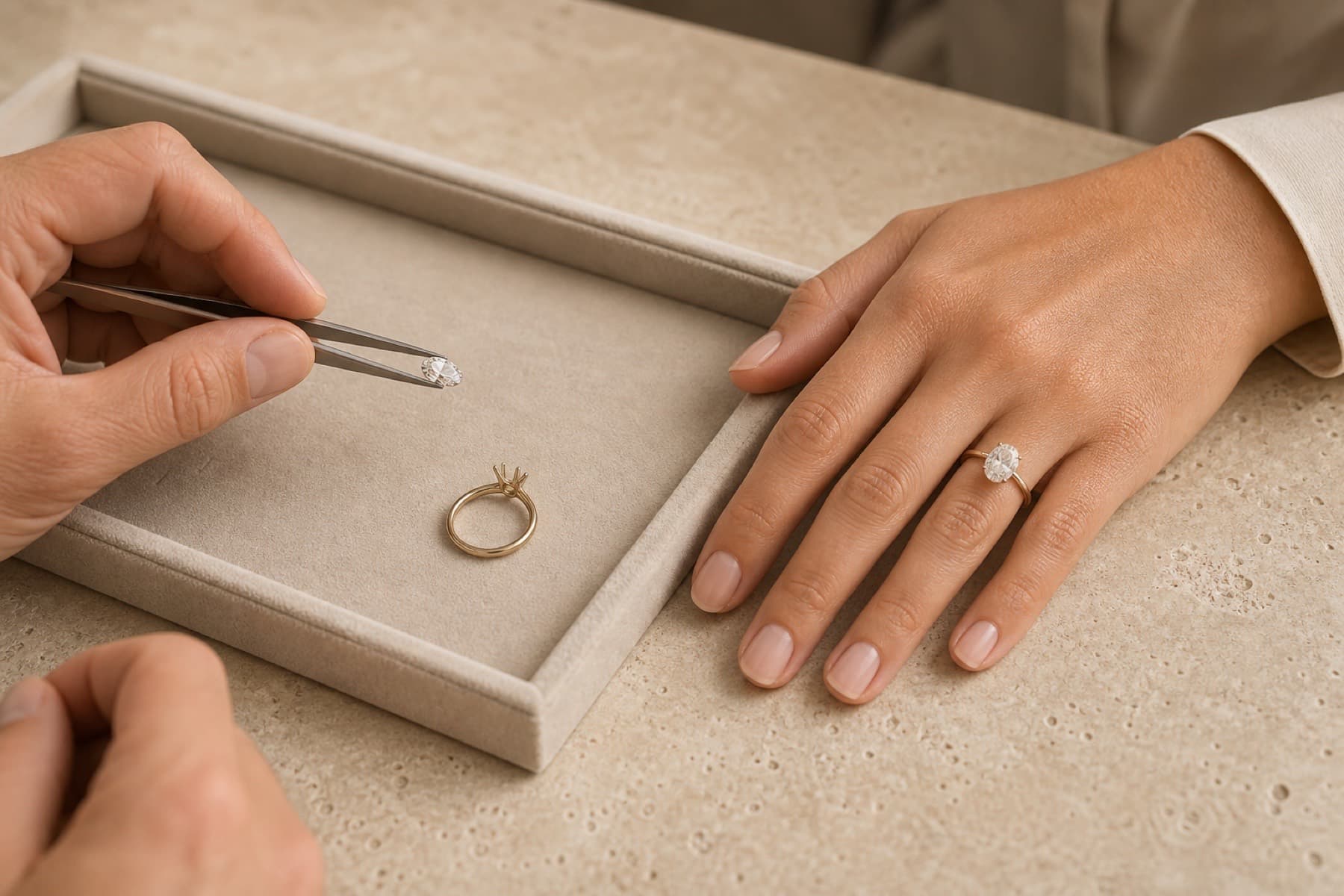
This is the part most people never see. A full custom design becomes a model from the approved CAD, is cast in your metal, and is cleaned up by hand. A proven or modified setting skips the model and goes straight into production. Either way, the stone is set by a setter who does nothing else, the prongs or bezel are finished so they don't snag, the ring is polished, and I check it against the approval before it comes anywhere near you.
If a wedding band is part of the plan, it's made against the finished ring, not a drawing of it.
The handover, and what comes with it
You get the ring, the stone's grading report, and the receipt. If you need an appraisal for insurance, say so early and it's ready with the ring. If the proposal is a surprise, we plan sizing so the ring goes on that night and gets made perfect the week after.
How long does all of this take? It depends on the stone and the design, and you'll have a realistic window before the deposit. The fastest projects are the ones where the number and the date are on the table in the first text and the decisions come quickly after.
Where the money goes
The stone, the metal, and the labor, including CAD if the design needs it. What you're not paying a private jeweler for is a showroom, a case of inventory, or a sales floor, and that's the difference between a ring built for you and a ring built for a case. How the number gets built breaks that down piece by piece.