
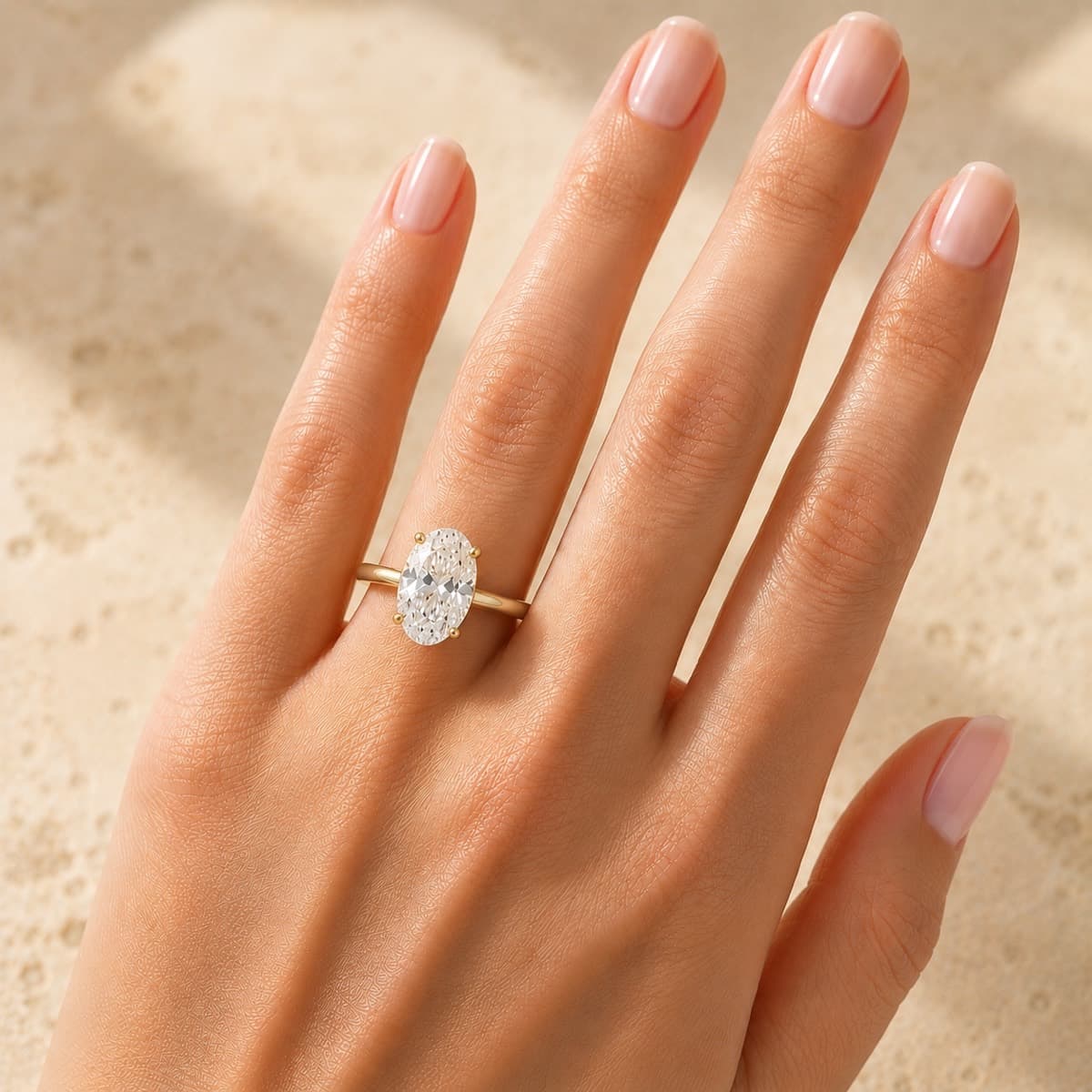
The shape gives presence without extra detail
An oval can look larger face-up than many round diamonds of similar weight, so the ring can feel generous while staying clean.
Inspiration, not inventory
A graceful oval center stone with clean metal, generous light, and a shape that feels romantic without becoming ornate.
Oval solitaires look simple from a distance, but small choices change the entire feeling of the ring. Andrew can help compare stone proportions, prong style, setting height, how the wedding band will sit beside the ring, and how visible the bow-tie is: the dark band that runs across the middle of some ovals and appears on no grading report.

Best for
Elongated, romantic simplicity
Diamond shape
Oval brilliant
Setting path
Modified setting or CAD-fit solitaire
Custom complexity
Low to moderate
Why this direction works
Andrew uses the inspiration image to decide what needs to be selected, modified, or built from scratch so the ring feels right in real life.
An oval can look larger face-up than many round diamonds of similar weight, so the ring can feel generous while staying clean.
A slender oval, a fuller oval, and a softly elongated oval can feel like three different rings once set.
Prongs, basket height, and band width can be tuned so the stone stays the main event from every angle.
You don’t need to know a single one of these words yet. Send the photo, and Andrew walks you through every choice in plain English, with real examples in front of you, until the ring is exactly right.
01
Ovals range from soft and rounded to long and dramatic, and two ovals of the same weight can look very different on the hand. Andrew shows you the range in person, natural and lab-grown both, and points out the dark bow-tie shadow some ovals carry, so you never take one home by accident.
02
How high the diamond rides above the finger, and how the band rises to meet it. Lower feels sleek and snag-free; a little height lets in more light. A hidden halo, a tiny circle of diamonds tucked under the center stone, is an option only when it earns its place.
03
Yellow gold, white gold, rose gold, or platinum. A plain polished band keeps it classic; a fine line of tiny diamonds down the shoulders adds sparkle. Band width gets chosen on her hand, not from a chart.
What Andrew would compare
I would compare more than one length-to-width ratio before settling on the stone.
I would check bow-tie visibility in real viewing conditions, not just from a grading report.
I would plan the wedding band relationship before production so the finished set feels intentional.
Oval diamonds should be chosen by appearance as much as paperwork. Natural and lab-grown ovals can both work beautifully, but the comparison should include face-up spread, bow-tie behavior, color appearance, and how the stone sits in the setting.
A solitaire setting can be selected and modified when the foundation is close. CAD becomes useful when the oval needs a specific height, hidden detail, or wedding-band clearance that a stock mounting cannot handle cleanly.
The oval has no sharp corners, which helps for daily wear. The main practical decision is height: too low can limit the wedding band fit, while too high can feel less natural on the hand.
If a flush wedding band matters, discuss it early. Oval baskets and hidden halos often need small side-view changes so the band does not collide with the engagement ring.
What to text Andrew
A photo, saved post, rough sketch, or short note is enough. Andrew can help decide whether the best path is selecting the exact diamond, modifying a setting, or using CAD only when the design needs it.
Keep comparing

A focused, minimal ring that lets the diamond carry the emotion, proportions, and light.
Customize this direction
A soft rectangular center with a plush outline, generous sparkle, and a less expected profile than a round brilliant.
Customize this direction
A pear-shaped center with a fine pavé band for movement, shimmer, and a soft directional silhouette.
Customize this direction
A rectangular brilliant center with hidden detail under the crown for sparkle that feels discovered up close.
Customize this directionUseful guides
How to compare round, oval, cushion, emerald, radiant, pear, marquise, and other diamond shapes for a custom engagement ring.
Read guide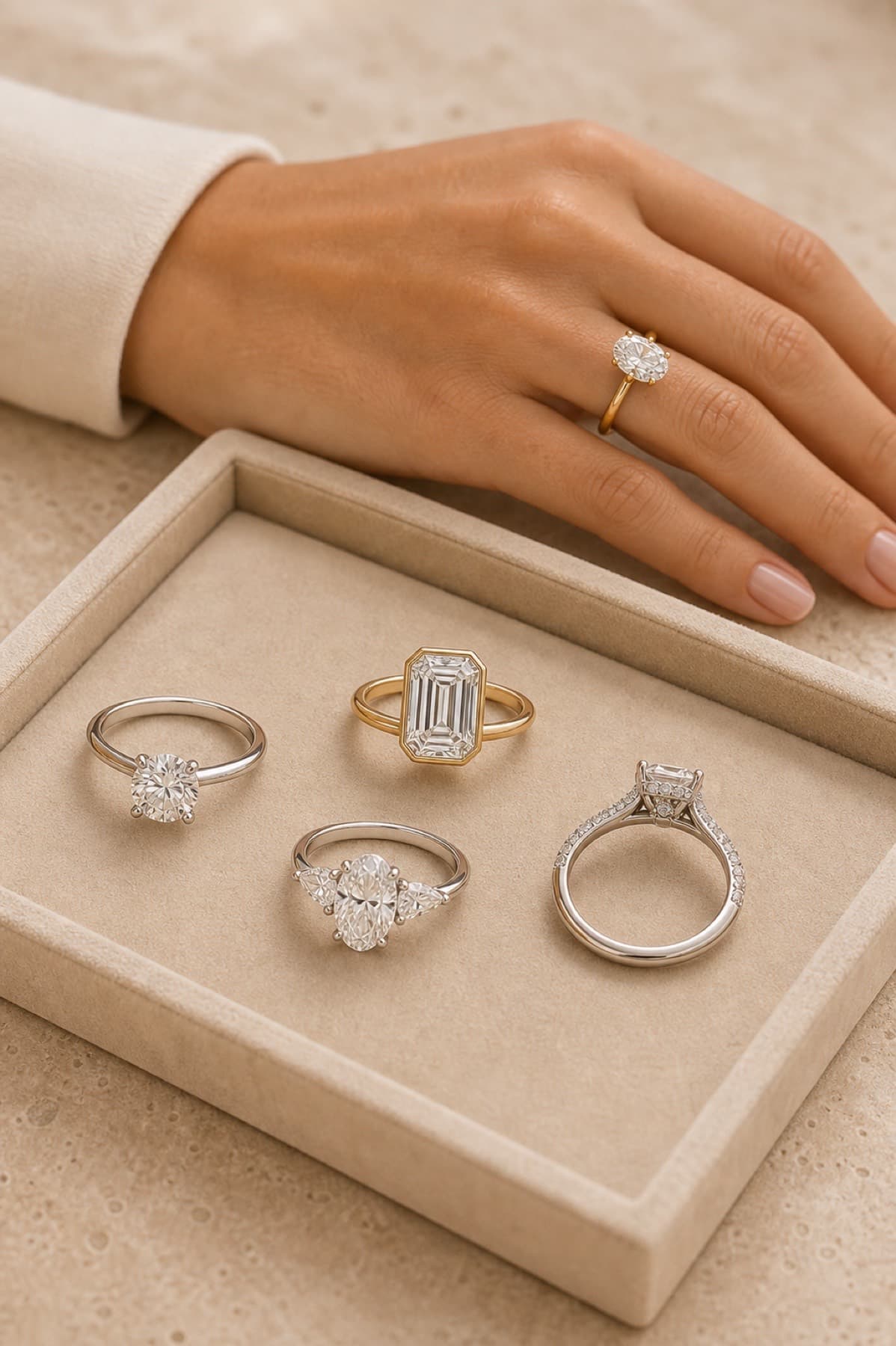
Solitaire, halo, pavé, bezel, three-stone: every setting term in plain English, plus the side-view and lifestyle questions that decide how a ring wears.
Read guide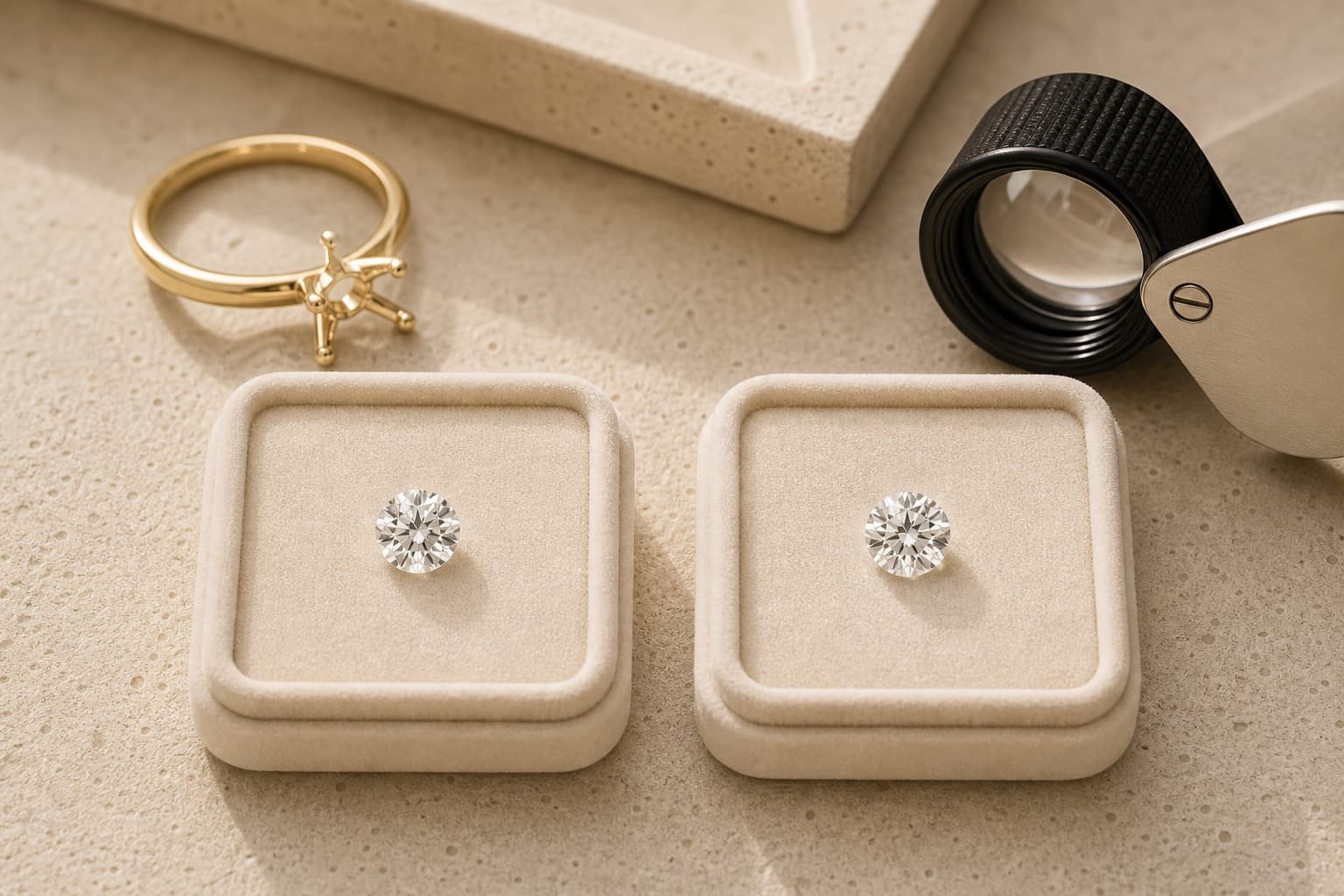
Lab-grown and natural diamonds compared honestly by a wholesale dealer: what is identical, what the price gap actually buys, and how to choose between them.
Read guideWant the full page on this style, from the stone to the price?
Oval Solitaire engagement rings in San DiegoIn their words
“We walked in thinking $3,500 wouldn’t get us anything special. Andrew built Jasmine an oval that gets compliments almost weekly, and he never once tried to push us past our number.”
There is no single best ratio. Many couples like a softly elongated oval, but the right choice depends on finger shape, setting height, and whether the stone looks balanced in person.
Yes. Natural and lab-grown diamonds can both be used. Andrew can compare them as distinct choices so the decision is based on origin preference, size goals, appearance, and budget.
It can be, but only if it stays delicate. A hidden halo should add interest from the side without thickening the ring or forcing the stone too high.
Sometimes. It depends on basket shape, setting height, and whether the ring is designed with band clearance from the beginning.
Text Andrew
Text Andrew the photo or style you keep coming back to. He can help translate it into a diamond choice, setting path, and next step without treating the inspiration as inventory.