
Guide
Engagement Ring Insurance and Appraisals
By Andrew GonzalezGIA Diamonds Graduate7 min readUpdated
Insure the ring the week she gets it, and insure it against a right-sized appraisal rather than an inflated one. Engagement ring insurance is cheap relative to what it protects, commonly around one to two percent of the ring's value each year, and the appraisal is the document the whole policy is built on. Three pieces of paper follow a ring out of my studio: the diamond's grading report, the receipt, and the appraisal. They answer three different questions, and mixing them up is how people end up over-insured, under-insured, or paying premiums on a number nobody would ever pay out.

What is an appraisal, and how is it different from the report?
The grading report describes the stone: its measurements, color, clarity, and cut, verified by a laboratory. It says nothing about price. The receipt says what you actually paid. The appraisal states a replacement value for insurance purposes, and it is the document an insurer builds a policy on. You need all three, and they are not interchangeable. The report guide covers what that first document actually says, line by line.
An appraisal written far above what you paid is not a compliment. It inflates premiums on value you could never claim, and I would rather see the appraisal sit close to true replacement cost. If a seller hands you an appraisal at double the price you paid, that number was written to make the purchase feel like a bargain, not to protect you.
How do you insure an engagement ring?
Two common paths. The first is a rider added to homeowner's or renter's insurance, which is usually the cheaper option and the easier one if you already have a policy. The second is a standalone jewelry policy from a specialist insurer, which typically covers more of the ways things actually go wrong.
The comparison worth making is not the annual cost. It is what triggers a payout. A policy that covers theft but not the ring going down a drain is covering the less likely event.
- Ask whether the policy pays cash value or forces replacement through their vendor.
- Check coverage for loss and mysterious disappearance, not just theft.
- Confirm whether the certified stone would be replaced like-for-like against its report.
- Ask whether you can use your own jeweler for the replacement.
- Re-appraise every few years; metal and diamond markets move.
What happens when you actually claim
This is the part nobody reads until it matters. Most policies replace rather than pay cash, and many insurers want to source the replacement through their own vendor. If your ring was built for you, a vendor-sourced substitute is not the same object, and that is where people get hurt.
So ask one question before you sign: can I have my ring rebuilt by the jeweler who made it? A well-documented custom ring can be reproduced faithfully, and a policy that funds that is worth more than one that saves a few dollars a year.
Why a custom ring is easier to insure
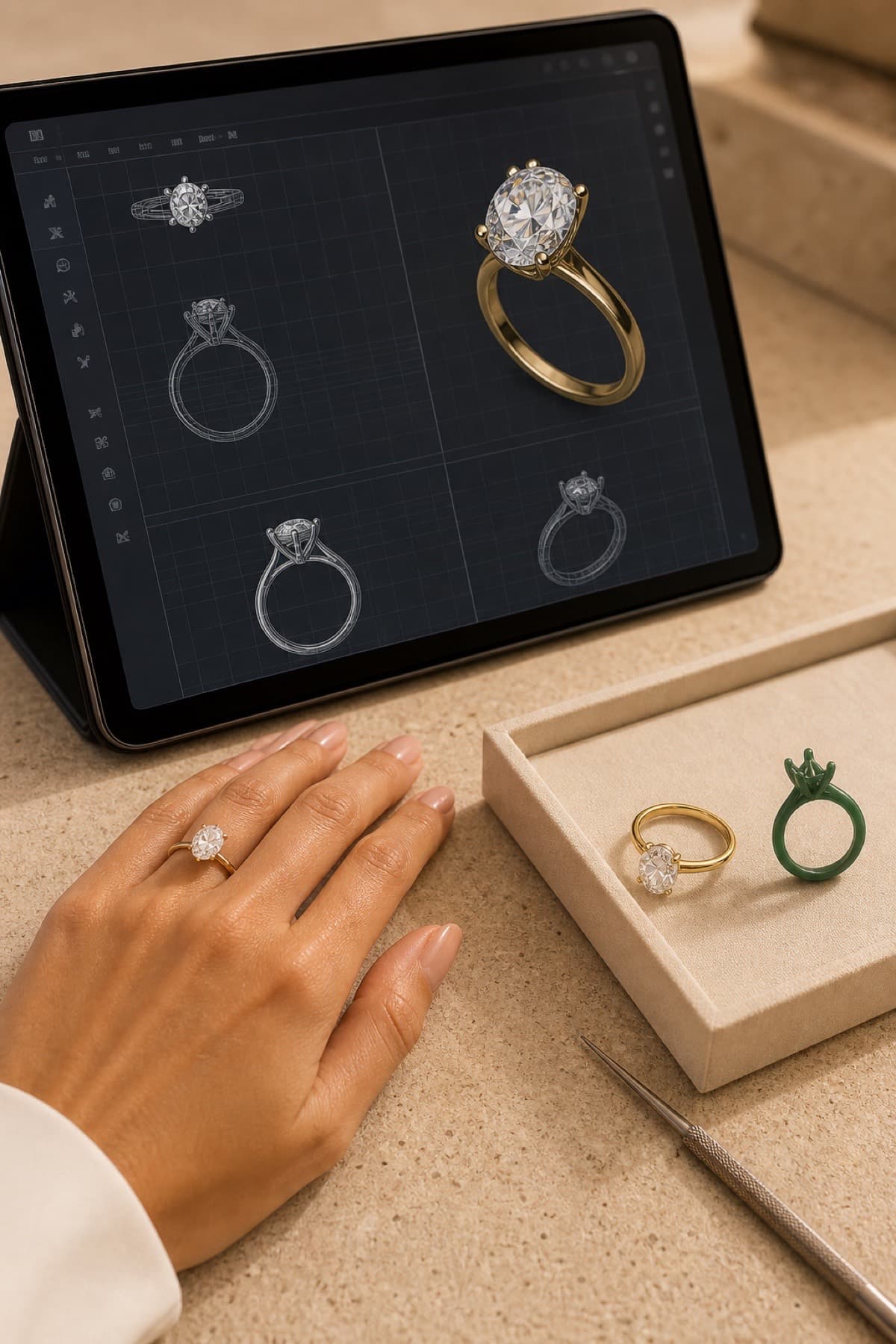
Every specification already exists on paper: the stone's grading report, the metal, the design files if the ring was built from a new design. Keep those together with the appraisal. If the worst happens, a documented custom ring can be rebuilt to match, which is exactly what a like-for-like policy should fund.
Photograph the ring on and off the hand, and store the report number somewhere separate from the ring itself. It costs you ten minutes and it is the difference between describing a loss and proving one.