
Guide
How to Read a Diamond Grading Report
By Andrew GonzalezGIA Diamonds Graduate8 min readUpdated
A grading report is the one piece of paper every diamond buyer is handed and almost nobody is taught to read. Here's the whole thing, line by line, the way I read it at the desk: what each entry actually means for the ring you're building, which ones matter more than people think, which matter less, and the handful of things that aren't on the page at all.
The report number, and how to check it
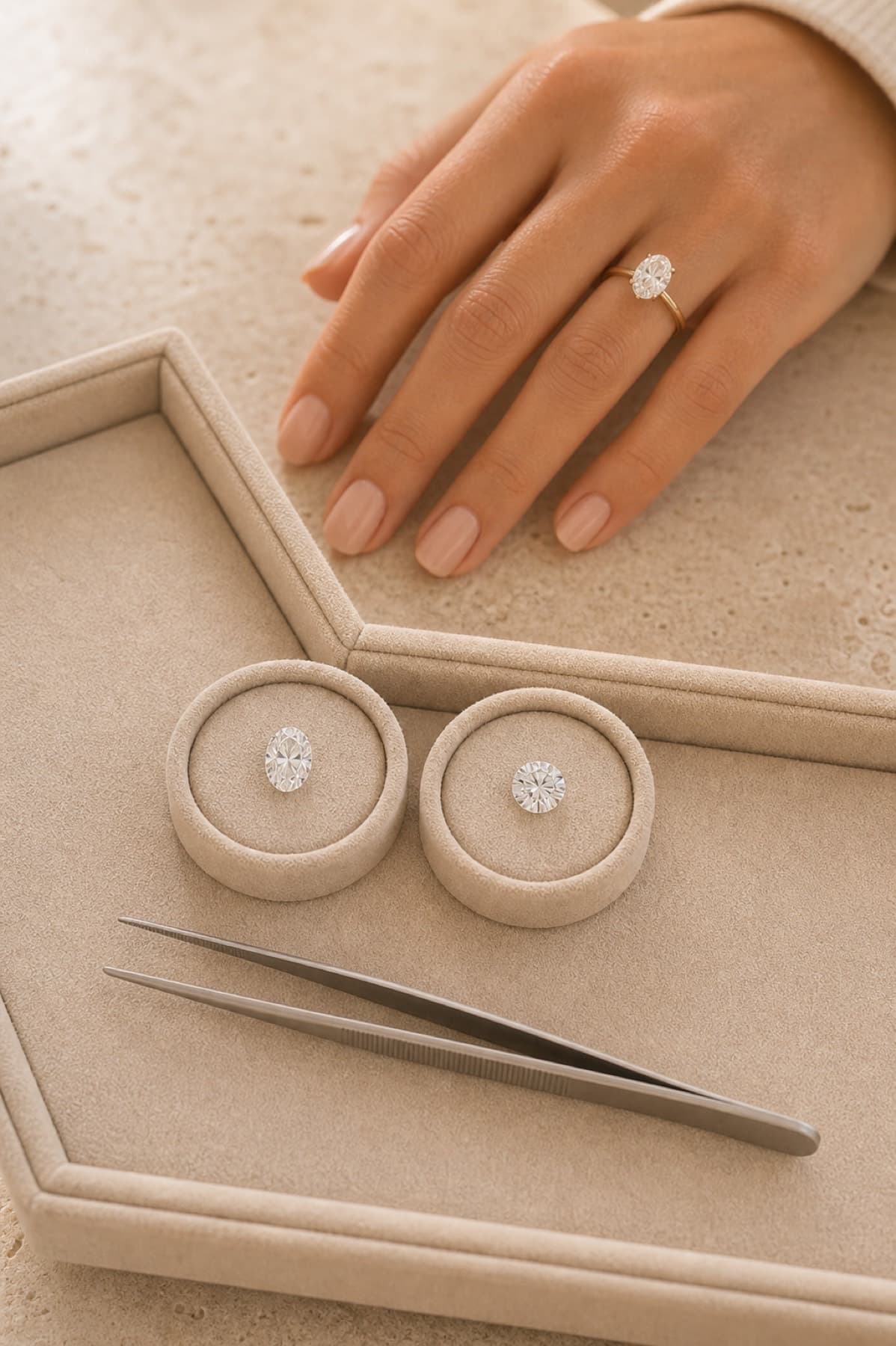
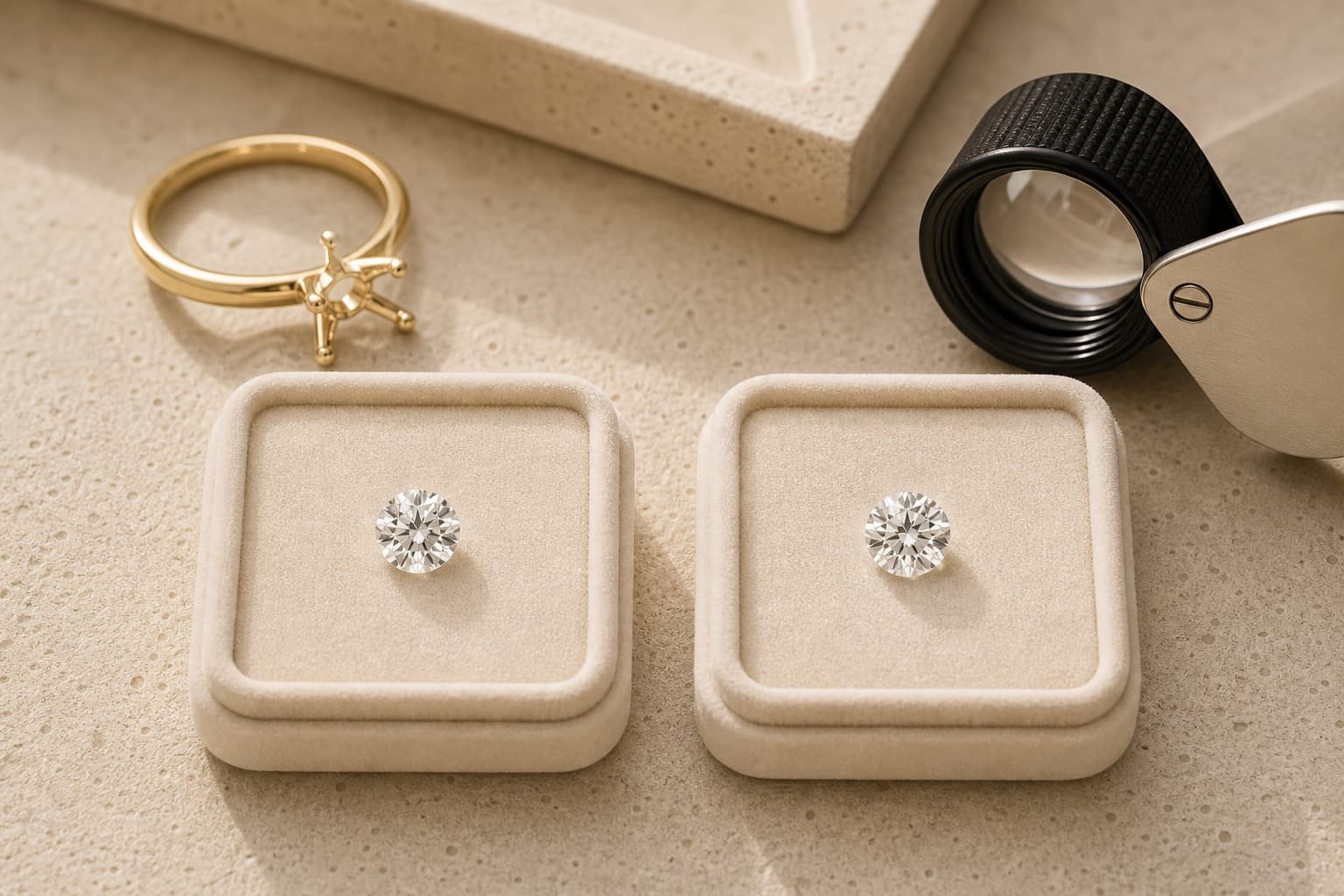
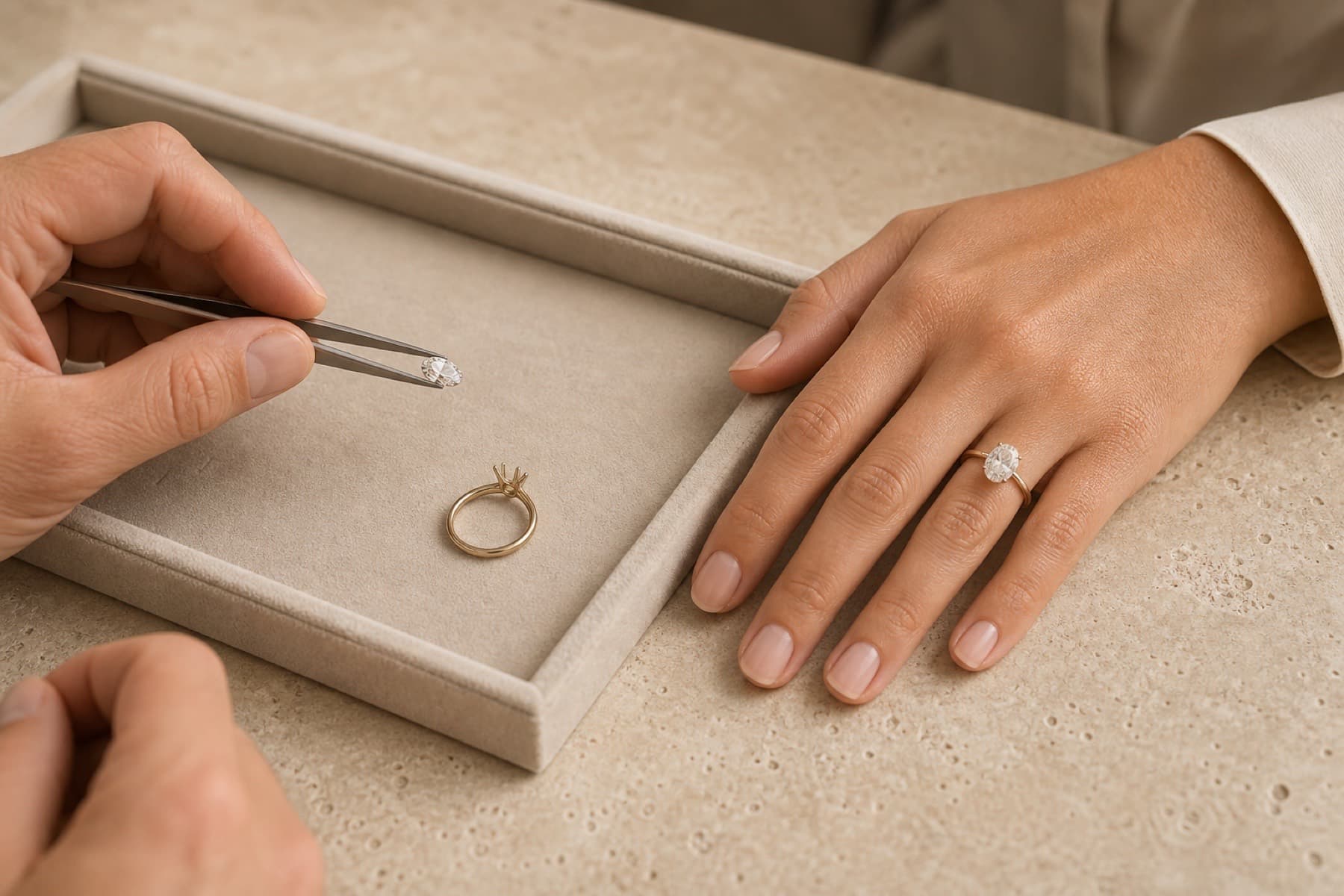
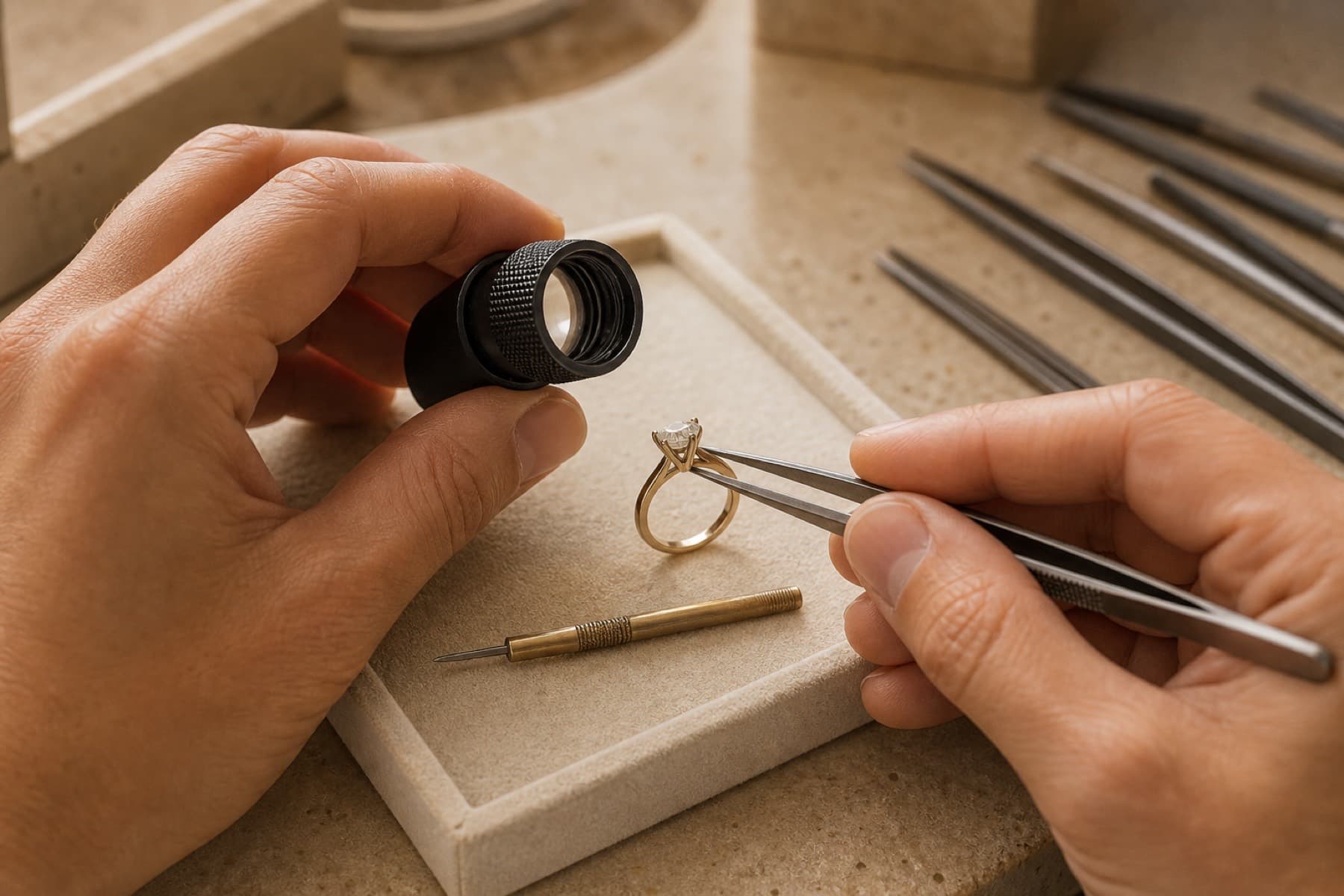
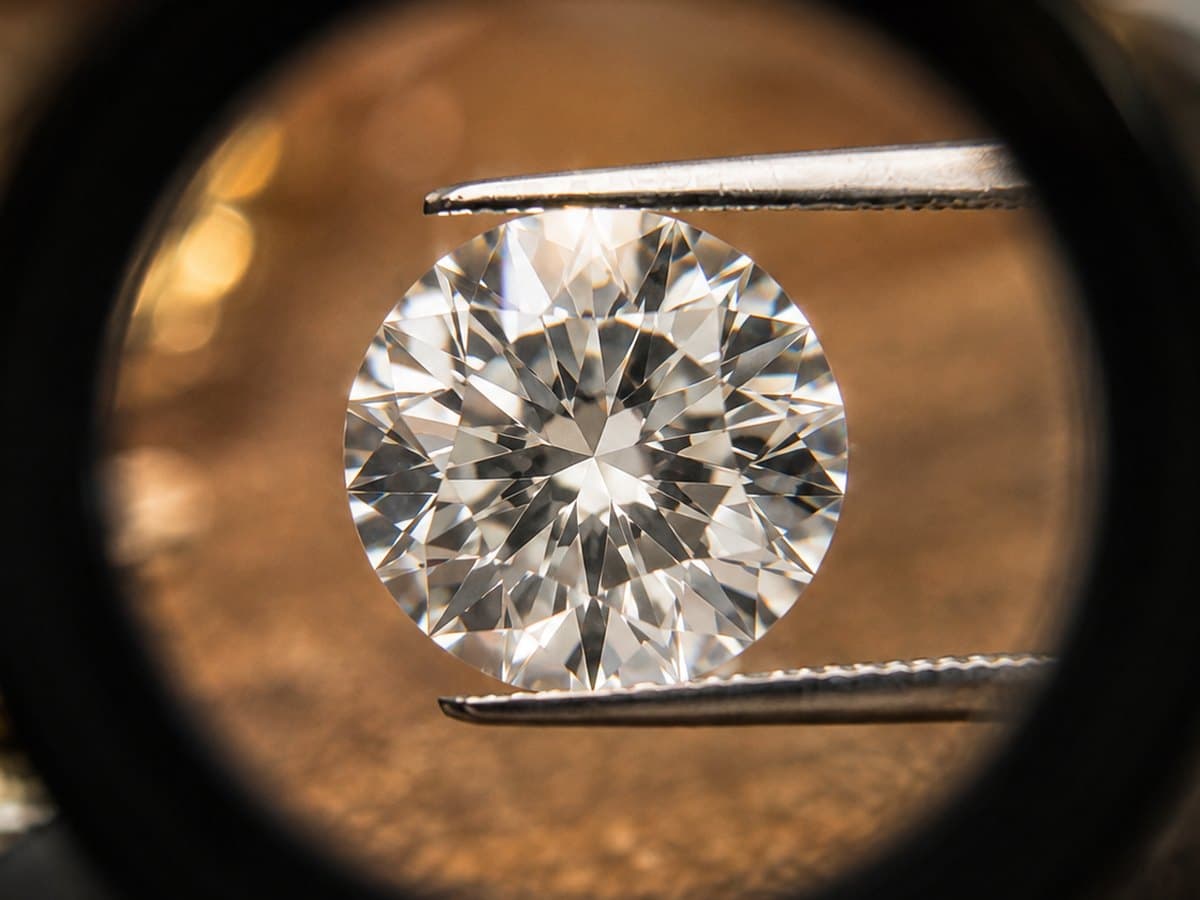
Every report has a number, and most stones have it laser-inscribed on the girdle, the thin edge where the top of the stone meets the bottom, too small to see without magnification. The lab keeps a public record; you can enter the number on the lab's website and see the report it issued. At the desk, I put the stone under the loupe, the jeweler's magnifier, read the inscription, and check it against the paper in front of you. Do this every time, with anyone.
Shape and measurements
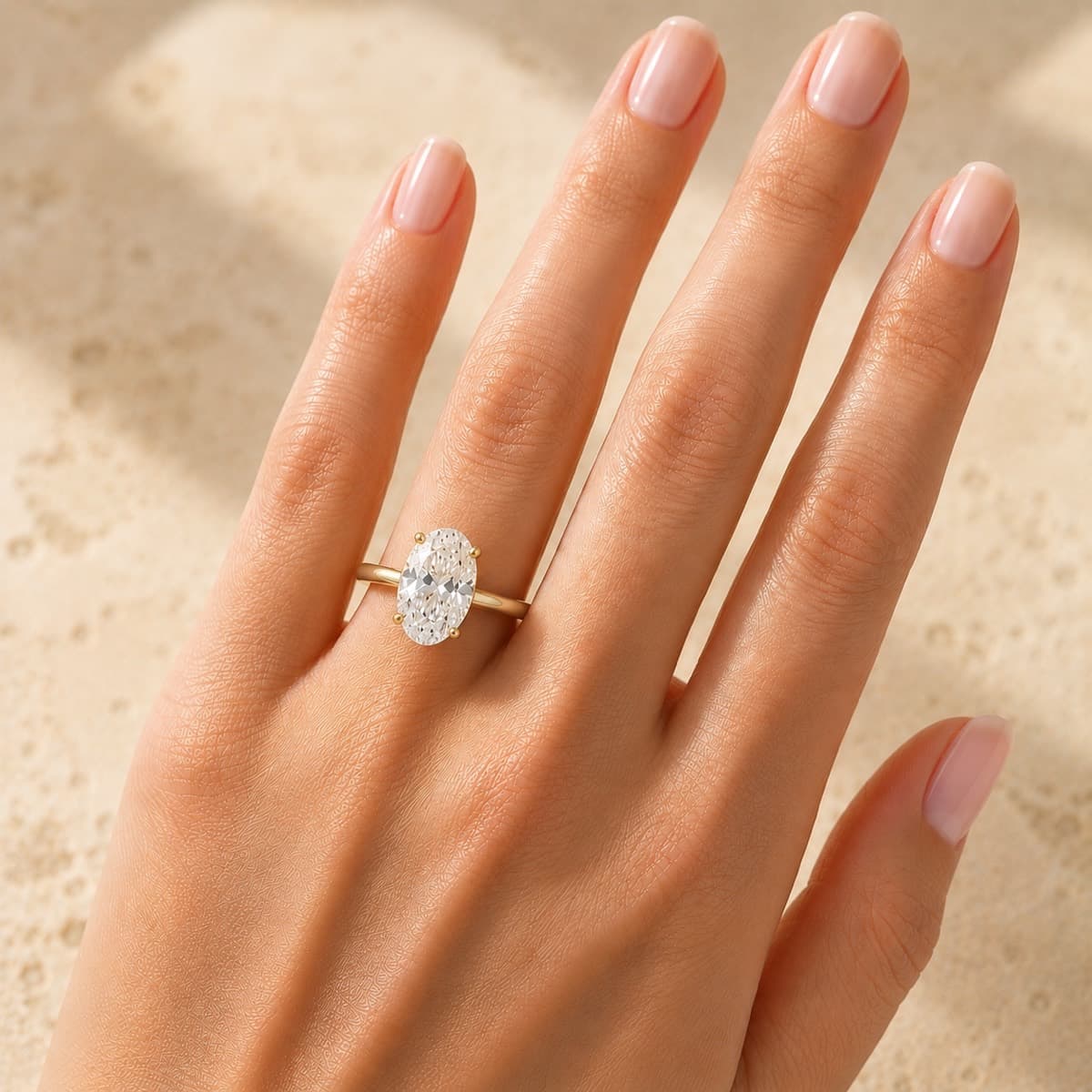
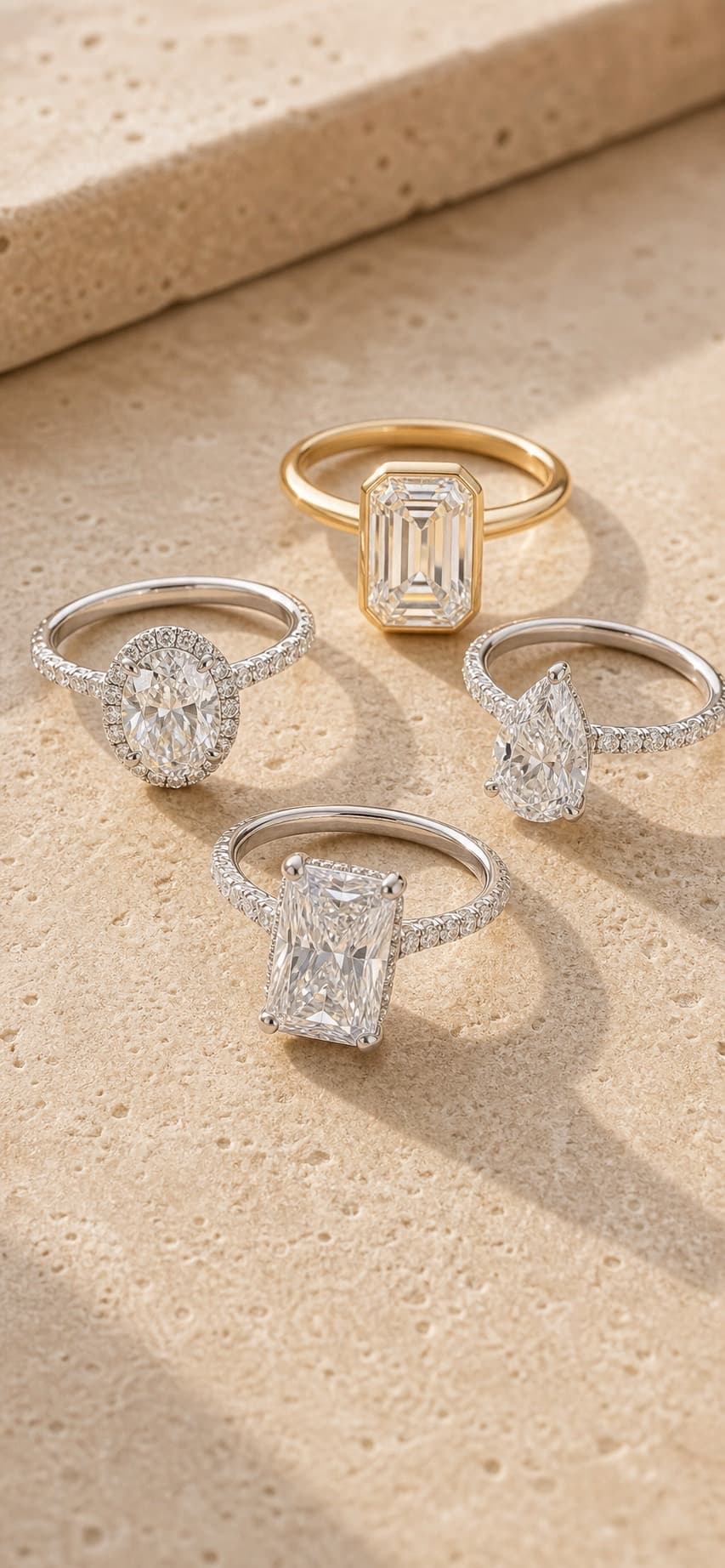
The shape is obvious. The measurements are where the useful information hides: length, width, and depth in millimeters. For a round, the diameter tells you how big it faces up; for an oval, cushion, or emerald, length divided by width gives the ratio, which is the difference between a long, elegant outline and a stubby one. Two stones with the same carat weight can have very different face-up size depending on how the weight is distributed, and the measurements are how you see that on paper.
Carat weight
Weight, not size. A stone cut deep to hit a round number can weigh more and look smaller than a stone cut well at a slightly lower weight. Prices step up at the round numbers, so a 1.90 that faces up like a 2.00 is often the smart buy.
Color
Graded on a scale from D (colorless) down through the alphabet. The truth: D through F look the same to almost everyone once the stone is in a ring; G through I look white in most metals and especially in yellow or rose gold; and the differences between adjacent grades are hard to see without a reference stone beside them. This is one of the places where money disappears into letters you'll never see.
Clarity
FL, IF, VVS, VS, SI, I, each split into 1 and 2. What the grade doesn't tell you is where the inclusion is. An SI1 with the inclusion under a prong is invisible for life; an SI1 with a dark crystal under the table, the big flat facet on top of the stone, is not. The plot on the report shows roughly where inclusions sit; whether they matter on the hand is a judgment made with a loupe in good light. This is why I won't buy a stone off the paper.
Cut grade, and the shapes that don't have one
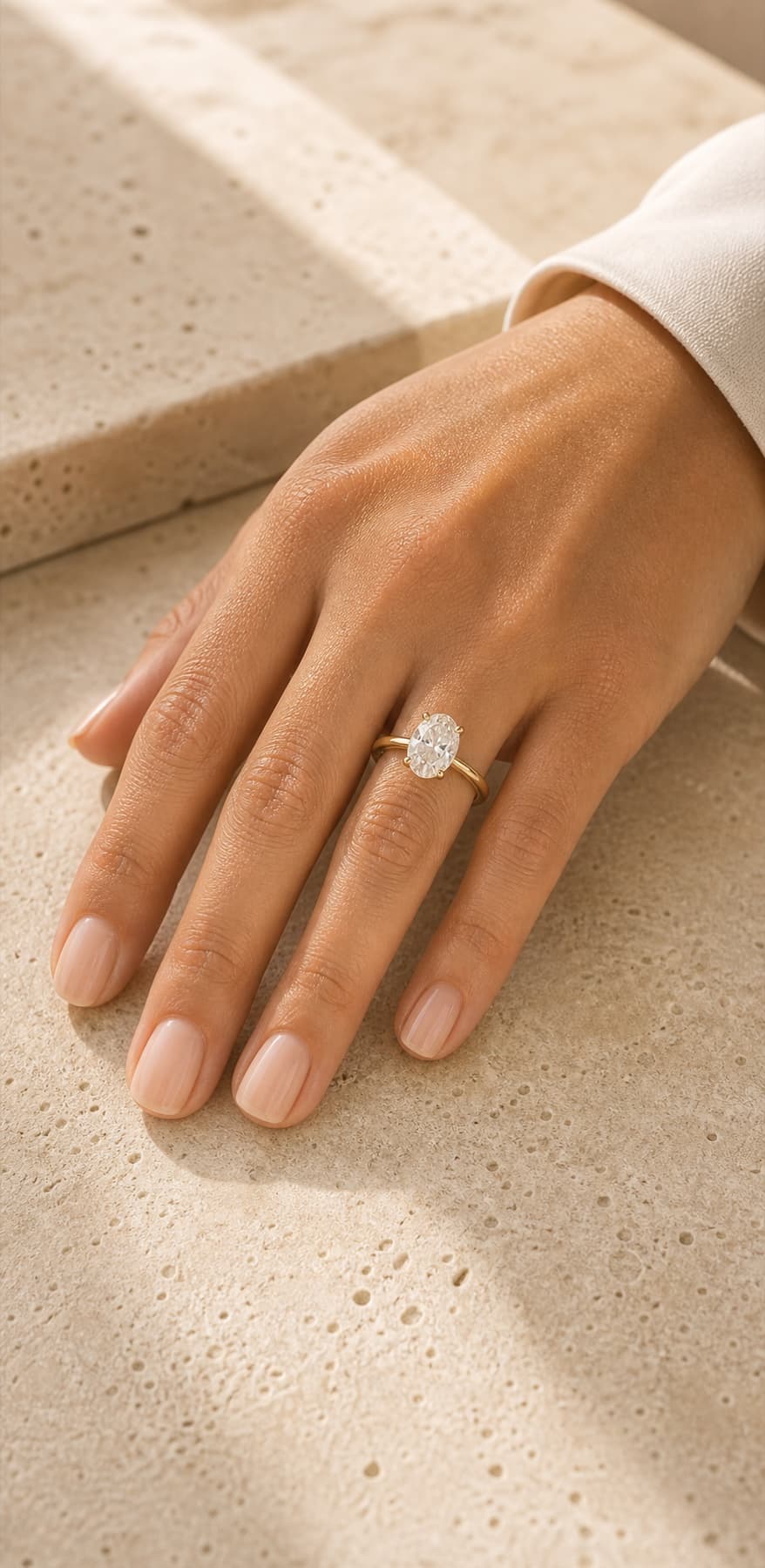
Rounds get a cut grade: Excellent, Very Good, Good, and so on, based on proportions and how the stone returns light. Ovals, cushions, emeralds, pears, and the rest get no cut grade at all. For those shapes the report gives you proportions, and the judgment of whether the stone is beautiful is yours and your jeweler's. It's the most important thing about an elongated stone and it isn't on the paper.
Polish, symmetry, and fluorescence
Polish and symmetry are finish grades; Excellent or Very Good is what you want and most good stones have it. Fluorescence is how the stone reacts to ultraviolet light, listed from None to Very Strong. It's not a flaw. In some stones strong fluorescence makes a slightly warm stone look whiter; in a few it makes the stone look hazy in daylight. You find out by looking, which is the theme of this whole guide.
The proportions diagram and the plot
The diagram shows depth and table percentages, crown and pavilion angles, girdle thickness. For a round, those numbers drive the cut grade. For everything else, they're the clues to how the stone will handle light: a very deep stone hides weight where you can't see it; a very thin girdle chips. The plot maps the inclusions, red for internal and green for surface. It's a map, not a verdict.
What the report can't tell you
Whether the stone is crisp or slightly milky. Whether the inclusions matter where they sit. Whether an oval carries a dark band across its middle. Whether the stone looks lively or flat in the light you'll actually live in. Those are the things you see every day, they aren't graded, and they're why two stones with identical reports can be priced the same and look completely different. The full list of what the paper leaves out is its own guide. The report is the floor of the decision. Your eyes, or mine, are the ceiling.