
The Diamond Study
Why one diamond lights up a room and another just sits there.
Most people tell me the same thing: I do not need to become an expert, I just want one that looks beautiful. Good, that is the right goal. What makes a diamond beautiful comes down to a few things you can learn to spot in about ten minutes, and the grading report only covers some of them. Below is a live diamond you can take apart. Play with it and you will see what I look for, and why two stones with the same paperwork and nearly the same price can be a world apart.
One diamond. One thing changed at a time.
Start with the examples along the top. Each one takes a well cut diamond and changes a single thing, then tells you what to look for and why it matters when it is your money. After that, the controls are yours.
Pick something to look at
Well cut1.50 ct, 7.45 mm across
Drag to turn the stone. Pinch to zoom.
Start here: this is the one that lights up a room.
What to look for
Even brightness from edge to edge, a crisp pattern of light and dark, and flashes that move as the stone turns. Drag it around. Nothing goes dead at any angle.
Why it matters
This is the diamond people remember. Somebody cut it with care, its marks are tucked out of the way, and it is crisp all the way through. Every other example here is this same stone with one thing changed.
How it measures up
A well cut stone in the same light scores 100. These are rough readings from this simulation, never grades. Trust your eyes on the stone first.
- Brightness
- Light coming back to your eye…
- Fire
- Flashes of color…
- Sparkle
- How much it changes as it moves…
- Light lost
- Light leaving through the bottom. Lower is better.…
- Width across
- A well cut stone at this weight is 7.45 mm7.45mm
Looking at a real diamond right now?
Text me the listing or the report number. I will tell you what I see in it, what the paper is leaving out, and whether it is the one I would buy. It costs nothing to ask.
This is a teaching model of a round brilliant diamond. It does not grade anything, it is not a picture of any real stone, and it is not affiliated with or endorsed by GIA. The real diamond always gets the last word.
“I just want one that looks nice”
You have already seen the difference. Nobody told you what it was.
Think of the one diamond you remember. Across a dinner table, on a friend’s hand, catching the light every time she moved. I would bet it was far from the biggest one you have ever seen. It just looked alive.
I have been chasing that look for more than thirty years, and I can tell you where it comes from. Somebody cut that stone with care. Every facet sits at the angle it should, so the light that goes in comes right back out at you. You never needed training to see it. Put a great diamond next to an ordinary one and everyone in the room reaches for the same stone.
Here is what makes it hard. Online, every diamond looks like that one. They are all shot the same way: bright lights, a slow spin, a list of grades underneath. The photo is built to flatter and the grades only tell part of the story, so the great stone and the ordinary one look the same on your screen and cost about the same. That is why I look at every diamond I source in person, with my own eyes, before I recommend it to anyone. I have never found another way to tell them apart.
So when someone tells me they just want it to look nice, I know exactly what they mean. Here is what I am checking for you.
Light that comes back to you
Cut decides whether a diamond throws light across a room or swallows it. Two stones of the same weight can do opposite things with it, and a listing only shows you the weight.
A mark the setting can hide
Nearly every diamond has small marks inside. One sitting out by the edge, which jewelers call the girdle, can often be tucked under the setting so you never see it again. The same mark in the middle is there every time you look down. After more than thirty years of making custom rings, I know what a mounting can hide and what it cannot.
Crisp, with no cloudiness
Some diamonds carry a faint haze that takes the snap out of them, a bit like a window that needs cleaning. Haze is nowhere on the report and photos rarely show it. With the stone in your hand you spot it right away.
The part most people get backwards
The better diamond is usually not the more expensive one.
A diamond is priced from its paperwork: the weight, the color letter, the clarity grade, the lab that wrote it up. Two stones with the same lines on paper are priced almost the same. Whether one of them is the knockout is not in the price, because it is not on the paper.
So a beautiful diamond is rarely about spending more. It is about who is doing the choosing. Buy from a list of grades and you get whichever stone happens to match. Work with someone who reads past the report and you get the good one, for about the same money.
You are not paying extra for the better stone. You are paying the same and refusing the worse one.
The report is a small part of the story
You and I can look at the same diamond and see two different stones.
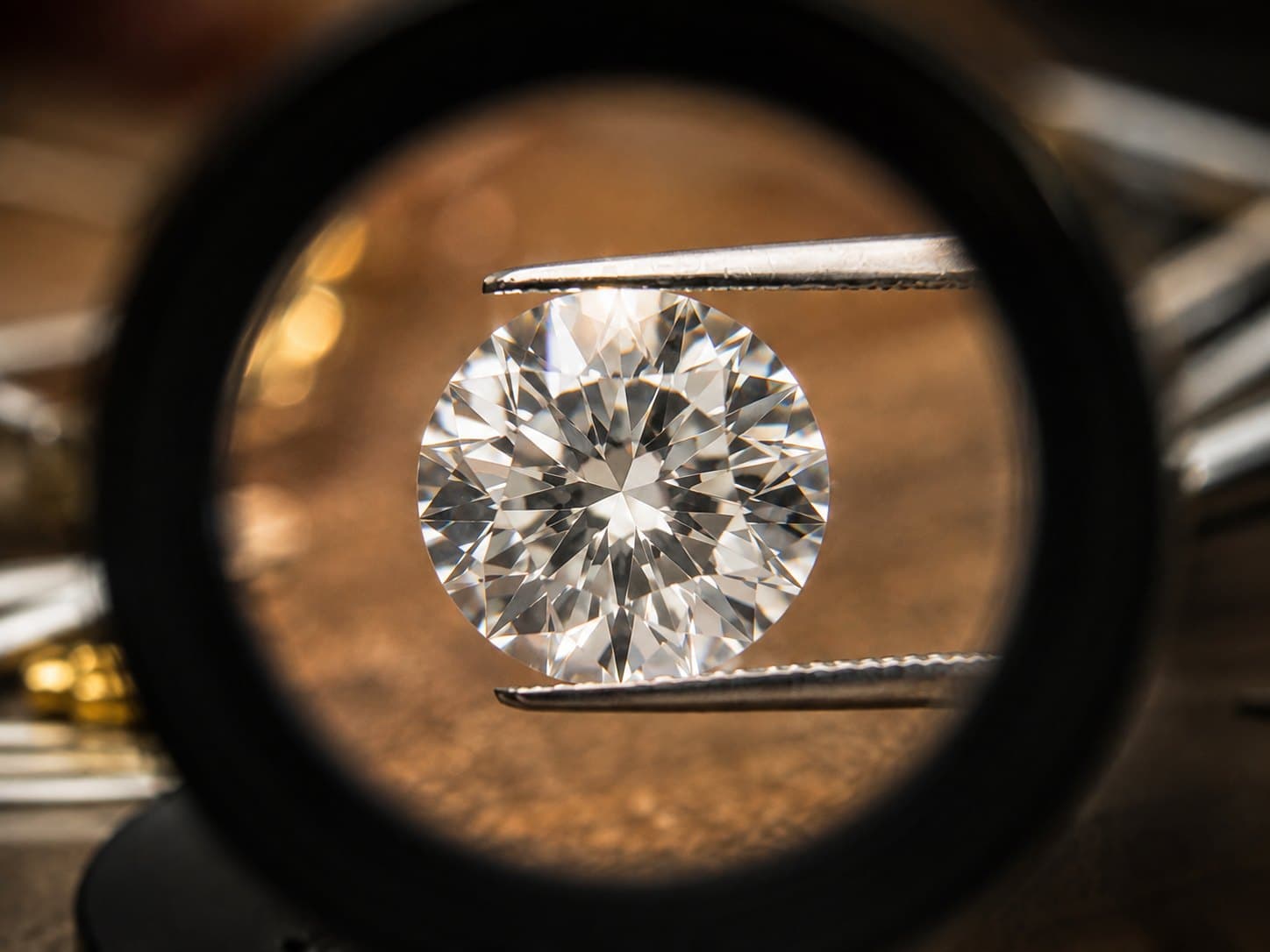
Put a diamond in front of most people and they see sparkle. That is what it is supposed to do, and under store lights nearly every diamond does it. After thirty years of buying and selling them, and training through GIA as an Applied Jewelry Professional, I am looking at something else: what the stone is doing with the light, where its marks sit, and whether the paper beside it is telling the truth about the stone in my hand.
The grading report matters. I read them every week and I would never buy without one. But it is a summary, and the things it leaves out are the things you live with. Here is how the same look goes from your chair and from mine.
What you notice
What I am checking
“It sparkles.”
Is it bright across the whole face, or only around the rim with a dark or glassy middle? Nearly every diamond sparkles under store lights. I want to know what it does by a window.
“It looks clean to me.”
Where are the marks, and what kind? A dark one under the top facet can repeat in the facets below it. The same mark out by the edge disappears under a prong for good.
“It looks white.”
From the side, against white paper, is there warmth or a brownish cast the letter on the report does not mention? And will the metal you picked hide it or show it?
“It is a carat and a half.”
How wide is it across? Carat is weight. A stone cut too deep hides that weight underneath, and you end up paying for a size nobody can see.
“The report says excellent.”
Is the stone crisp, or is there a faint milkiness through it? That is not graded anywhere on the paper, and it is the difference between a diamond that snaps and one that looks tired.
“It is the same as the other one, and cheaper.”
Which lab graded it, and how strict is that lab? Then I put the two side by side. Matching paper does not mean matching stones.
What I do with all of that
This is the work you are hiring me for. You tell me the look and the number. I go to the dealers I have bought from for years, pull the stones that compete, and send back every one whose report flatters it. What is left reaches you as photos and video shot the way I am looking at them, each report beside its stone, with my read on each one in plain words. You choose. I tell you which one I would buy, and why.
And if the stone you already found somewhere else is the good one, I will tell you to buy it.
Want me to find yours?
Leave your number and I will call or text you back, whichever you prefer. Tell me the shape and the budget and I will go looking.
Straight answers
What I steer people away from, and why.
Every one of these is something I have had to explain across a desk more times than I can count. Most of them have an example you can load into the stone above.
Why does cut come before everything else?
Because it is the one quality you can see from across a table. Color and clarity differences at the top of the scale take a loupe, white paper and a trained eye to find. A poorly cut stone looks dull to anyone, from anywhere, in any light.
So I spend the budget on cut and on the size you can see first, and on the grades you cannot see without magnification last.
Why do I pass on stones that are cut too deep?
You pay for a diamond by weight, but you look at its width. In the study, a well cut 1.50 carat round measures 7.45 mm across. Cut it too deep and the same 1.50 carats measures 7.07 mm, which is the face of a well cut stone of about 1.28 carats.
The rest of the weight is underneath, below the setting, where nobody will ever see it. And a bottom that steep lets light fall out the sides, so the middle goes dark. You pay more and you get less to look at.
Then why not go shallow, so it looks bigger?
It is tempting, and some sellers lean on it. A shallow stone does face up wider for its weight. The trouble is the bottom of a diamond works like a set of mirrors, and they only send light back to your eye when they sit at the right slope.
Flatten them and the light slips out instead. The stone looks big and glassy, with a washed out pattern and weak sparkle when it moves. Wide and lifeless is not a bargain.
Why does it matter where a mark sits, if the grade is the same?
The clarity grade tells you roughly how much is inside the stone. It does not tell you whether you will notice it. A dark crystal under the big flat facet on top sits in the one place your eye always lands, and the facets below can repeat it so one mark reads as three.
Move that same mark out near the edge and a prong can cover it for the life of the ring. Same grade, same price on a listing, and a completely different diamond to live with.
Why do I turn down a milky stone even when the grades are great?
Because crisp or milky is not graded anywhere on a standard report. A faint haze through a stone softens every edge in its pattern, like a window that needs cleaning. It can carry a top cut grade and beautiful letters and still look sleepy.
Stones like that tend to end up sold to people who never see them before they pay. It is one of the first things I check, and the easiest to catch with the stone in front of you.
Why not just buy the highest color and clarity you can afford?
Because past a certain point you are paying for differences nobody will ever see on a hand. The top grades exist, and they are rare, and they are priced for that rarity. A few steps down, a well chosen stone looks identical face up, set in metal, at arm's length.
Where that point sits depends on the shape, the size and the metal, which is why I would rather look at the stone than give you a rule. The money saved goes into cut and size, where you can see it.
Why do I look at a diamond away from the spotlights?
Jewelry store lighting is rows of small, hard spotlights, and it makes every diamond dance, including the weak ones. It is built to do that.
A ring gets worn at a desk, in a car, by a window, at dinner. So I look at a stone in soft daylight and ordinary room light before I call it good, and the photos and video I send you are shot the same way.
Why is fluorescence a case by case call?
Some diamonds glow blue under ultraviolet light. The report lists it as a strength, from none to very strong, and stops there. In most stones you will never see any effect. In a few, strong fluorescence leaves an oily, hazy look in direct sun.
The paper cannot tell you which kind you are looking at. The stone can, in about ten seconds outdoors.
Why does it matter which lab wrote the report?
Grading is a trained opinion, and labs are not equally strict. The same stone can earn different letters at different labs. A price that looks like a bargain is sometimes just a generous report.
When I compare quotes for a client, the first thing I check is whose opinion the price is built on.
Why does the study only show a round diamond?
Because round is the only shape where the angles are standard enough to model honestly. It is also the only shape a lab gives a cut grade to.
Ovals, cushions, pears, radiants, emerald cuts and marquises carry no cut grade at all. Everything you just learned about light coming back or leaking out applies to them twice over, with nobody grading it. For those shapes, looking at the actual stone is the whole job.
In their words
“We came in with a screenshot from one of the big diamond websites, basically daring him. He sourced the same specs with a noticeably better stone, side by side you could see it, and his number was lower. Honestly didn’t expect that.”
Questions about the study, and about what it shows
Is this diamond simulator accurate?
It is an honest illustration, not a measuring instrument. The stone is built from the real facets of a round brilliant, all 57 of them, and the picture comes from following light as it bends into the stone, bounces between the facets and leaves again. The lighting, the marks inside and the color are simplified. It does not grade anything, and it cannot tell you about one specific diamond. Use it to learn what to look for, then look for it in the real stone.
What are the best proportions for a round diamond?
The well cut stone in the study has a top facet 57 percent of its width, a top slope of 34.5 degrees, a bottom slope of 40.75 degrees and a total depth near 60 percent. Those all sit inside the range the strict labs give their top cut grade. No single number makes a stone good, though. The angles work as a set, which is why two stones inside the top grade can still look different, and why the sliders are worth ten minutes of your time.
Why does my diamond look dark in the middle?
Usually one of two reasons. If the bottom of the stone is cut too steep, light leaks out the sides instead of coming back up, and the center goes dark and stays dark. Load the too deep example to see it. The other reason is you: look at any diamond up close and your own head blocks some of the light, which a well cut stone shows as a crisp pattern of dark arrows. Arrows that come and go as the stone moves are healthy. A center that is simply dead is not.
Can you see inclusions in a diamond without magnification?
Sometimes. It depends on how big the mark is, how dark it is, where it sits, how large the stone is and how good your eyes are. There is no grade that promises a stone is clean to the naked eye. That is a judgment somebody makes with the stone in hand, which is why I make it for every stone I send a client and say so in plain words.
Does a diamond look different in different lighting?
Very. Hard spotlights give you flashes of color and sharp sparkle. Soft daylight shows brightness and any haze. A dim room shows whether the stone can pick up the little light there is. The Light tab in the study switches between them without changing the stone, and it is the fastest way to understand why a diamond should never be judged in a jewelry store alone.
Can I use this to check a diamond I am about to buy?
No, and be careful with anything online that says you can. A screen cannot see your stone. What you can do is text me the listing or the report number. I will tell you what the report is not saying, and whether I can put something better beside it for the same money. If the one you found is the good one, I will tell you to buy it.
Text Andrew
Found a diamond? Text me the report before you pay for it.
A listing link, a report number, or a photo is enough. I will tell you what the paper is not saying, and whether I can put a better stone beside it for the same money.
- GIA Applied Jewelry Professional
- Trained to judge a diamond by eye, not just by its report.
- 30+ years in jewelry
- Buying and selling diamonds and gold wholesale every week.
- Most rings in 14 to 30 days
- CAD builds can run longer. You know which yours is up front.
- The price in writing first
- A written plan and a real number before any deposit.