Not a mall, not a website: the third way to buy a ring
There are two ways most people around Poway and Rancho Bernardo end up buying an engagement ring, and both have a problem. Walk into a showroom and part of every dollar pays for the showroom: the rent, the staff, the cases full of rings that have to be financed whether anyone buys them. Order online and you are trusting a photo and a report for the most important piece of jewelry you will ever buy, with no one who has actually held the stone.
I do it the third way. I don't carry inventory, so there is nothing I need to move and no reason to steer you. You tell me the ring and the number; I go to the brokers I have worked with for thirty years and hand-pick the diamond for you, stone by stone. Then the ring is made to order around it, in CAD if the design needs it, from a proven setting if it doesn't. Because I am not paying for a showroom, more of your money ends up in the diamond and the workmanship.
Here is something most people don't know. Custom jewelers see the good stones first, because we pick them one at a time for a specific client. The big online platforms buy what is left, in bulk, as cheaply as they can, and mark it up. That is why two diamonds with the same grades can be priced the same and look completely different, and why the one I bring you usually wins side by side.
The part of the ring you'll actually see
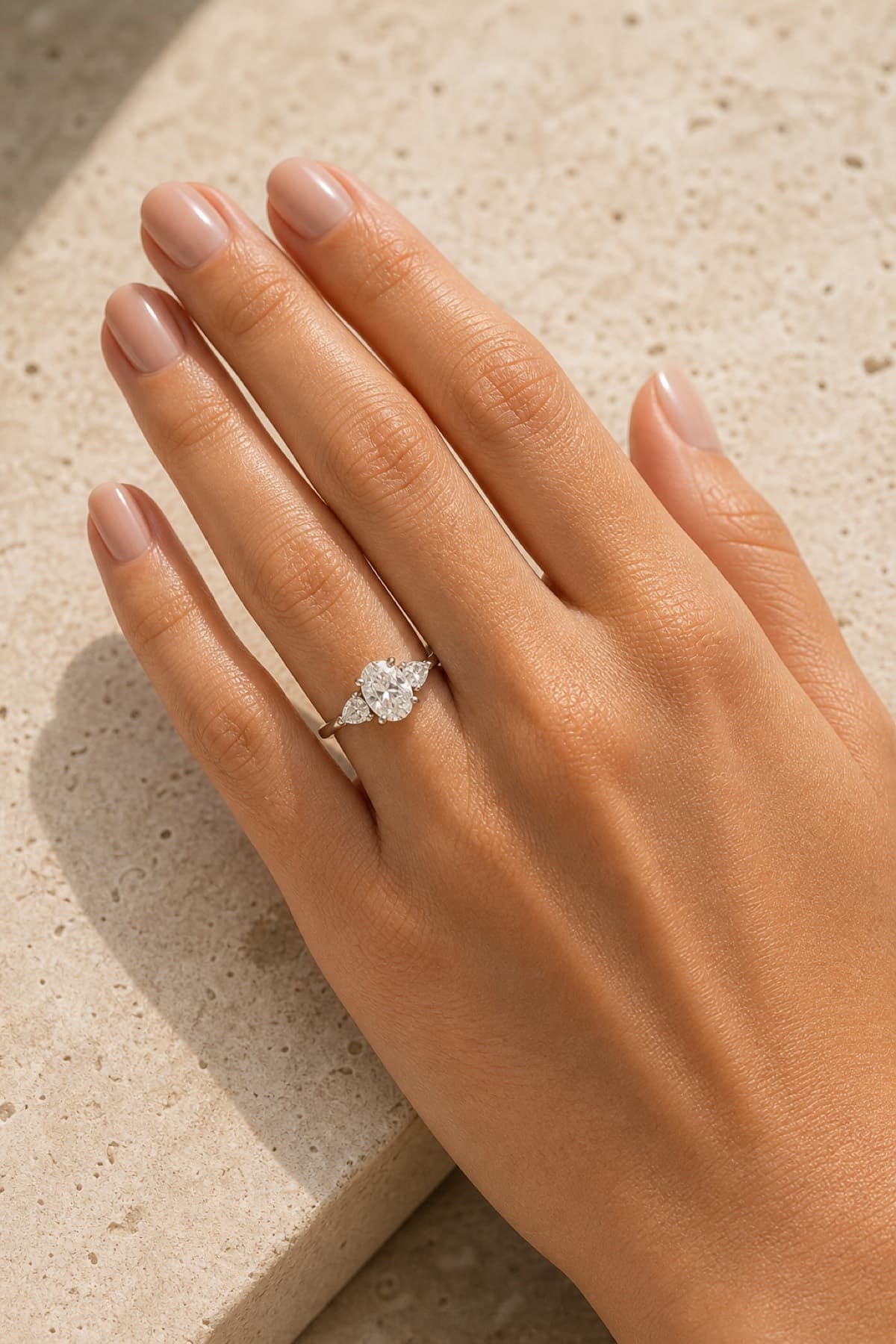
Hold two one-carat ovals side by side. If one is cut well and the other is cut to save weight, the good one can look noticeably larger face-up and a great deal livelier, and it can cost the same. That is the first place money should go: into cut and proportion, because it is the part you see from across the kitchen.
The second place is the setting. Prongs that are finished properly, a shank with enough metal to hold its shape, a basket that lets light in and lets a band sit close. None of that is expensive. All of it is the difference between a ring that looks good for two years and one that looks good for thirty.
After that, the returns fall off fast. Climbing another color letter, or another clarity step you'd need a microscope to find, changes the paper and the price and almost nothing you can see. If the budget has room, I'd rather put it into a slightly better cut or a little more size. I'll show you the comparison rather than asking you to take my word.
Natural and lab-grown, compared honestly
Lab-grown diamonds have made a real difference to what a given number can buy in visible size. They are diamonds. They look like diamonds because they are. What they don't have is rarity, and for some people that matters a great deal and for others it doesn't matter at all. I'm not going to tell you which person you are.
What I will do is put a natural and a lab-grown stone of the same shape on the desk, explain the difference in origin and the difference in price, and tell you what I'd think about if it were my decision: how she feels about origin, how much visible size matters to her, and whether the money saved would go into a better setting or a better band. Couples from Rancho Bernardo and 4S Ranch ask this more than any other question, and the answer is different for each of them.
Whatever you choose, the stone gets chosen the same way: by eye, in person, with the report as a starting point and not the finish line.